JAPAN, AND JPY
Over the past seven months, Japan’s macroeconomic landscape has undergone a dramatic transformation driven by domestic political shifts and severe geopolitical shocks. The October 2025 arrival of Prim
Watch Bank of Japan Decision Tuesday, April 28, 2026
📈 Japan’s financial markets are navigating severe stagflation risks as the Middle East conflict spikes oil prices! 🛢️ With the central bank pausing at 0.75 percent, all eyes are locked on the April meeting. Monitor USD JPY around 160 closely! 💴👀
Over the past seven months, Japan’s macroeconomic landscape has undergone a dramatic transformation driven by domestic political shifts and severe geopolitical shocks. The October 2025 arrival of Prime Minister Sanae Takaichi initiated “Sanaenomics,” an aggressive fiscal expansion that secured a massive LDP supermajority in the February 2026 snap election. This mandate has accelerated strategic infrastructure and defense spending. Concurrently, the Bank of Japan abandoned its negative interest rate policy in December 2025, hiking the benchmark rate to 0.75 percent to combat inflation and currency weakness.
However, this positive trajectory has been severely complicated by the late February 2026 escalation of the US-Iran conflict and the effective closure of the Strait of Hormuz. Given Japan’s 94 percent reliance on Middle Eastern crude oil, this exogenous supply shock triggered a global energy crisis that sharply reversed the Nikkei 225 and pushed the 10-year JGB yield to a multi-decade high of 2.38 percent.
Forex traders must now focus on the Bank of Japan’s April 28, 2026, monetary policy decision. The central bank faces an incredibly delicate balancing act: addressing imported stagflation risks from the oil shock while actively managing the yen, which is precariously testing the 160 level against the USD amid widespread fears of government intervention.
Political Consolidation and Fiscal Expansion
Japan’s political landscape has dramatically stabilized following the October 2025 ascension of Sanae Takaichi, the nation’s first female Prime Minister and leader of the Liberal Democratic Party (LDP).
Under PM Takaichi, the LDP secured a historic mandate in the February 2026 snap election, capturing 316 of 465 seats. This dominance, in coalition with the Japan Innovation Party, empowers a neo-conservative agenda focused on national resilience. Key policies include accelerating defense spending to 2% of GDP and proposing a radical 0% consumption tax on food, which introduces long-term fiscal concerns.
The immediate priorities for the government are passing an 8.56 trillion JPY stopgap budget and coordinating extensive infrastructure projects agreed upon during a pivotal bilateral summit with the United States.
The election of Sanae Takaichi in October 2025 marked a historic leadership shift, bringing a fiscal dove and defense hawk to the premiership during a critical economic juncture.
The February 2026 snap election delivered an unprecedented 316-seat supermajority to the Liberal Democratic Party, granting unparalleled legislative authority.
The Takaichi administration proposed eliminating the 8 percent consumption tax on food, raising severe fiscal deficit concerns among institutional bond investors.
A March 2026 summit with the US secured massive investments for SMRs and natural gas infrastructure to bolster energy security.
Looking ahead, the implementation of an 8.56 trillion JPY stopgap budget will heavily influence near-term fiscal deficit projections and Japanese Government Bond valuations.
Navigating Inflation and Oil Shocks
The Bank of Japan (BoJ), under the leadership of Governor Kazuo Ueda, has recently executed a defining shift away from its historic ultra-loose monetary policy, marking a pivotal moment in the nation’s economic trajectory. Governor Ueda, whose five-year term began in April 2023, steers the institution alongside a nine-member Policy Board, which includes two Deputy Governors. This body is charged with establishing Japan’s monetary policy, guided by a dual mandate of achieving 2 percent price stability and ensuring the stability of the domestic financial system.
Policy formulation occurs through majority voting during eight scheduled Monetary Policy Meetings (MPMs) annually. These decisions are informed by continuous scrutiny of key economic indicators such as the output gap, medium-term inflation expectations, foreign exchange dynamics, and structural wage growth.
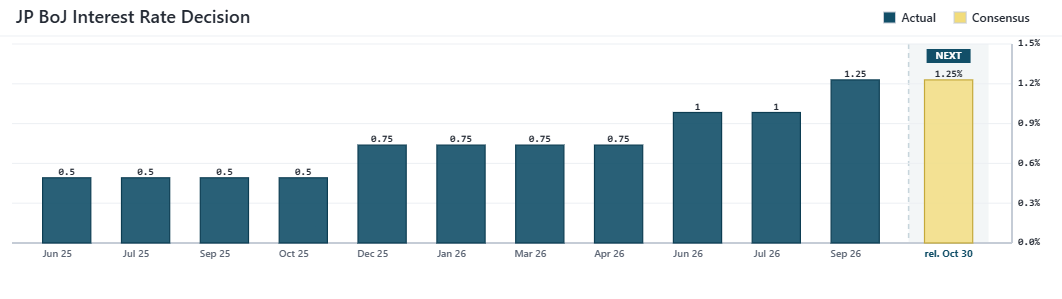
A definitive policy change occurred in December 2025. After maintaining the short-term rate at 0.50 percent through the autumn, the Policy Board voted unanimously to hike the benchmark rate by 25 basis points to 0.75 percent. This move, reaching borrowing costs not seen since September 1995, was a response to concrete evidence of an intensifying virtuous cycle between wages and prices. It also aimed to counteract macroeconomic pressures from a severely depreciated yen, which was inflating import costs, as the bank’s models indicated underlying inflation would sustainably exceed the 2 percent target.
However, a sudden geopolitical shock in early 2026 forced a temporary recalibration. Amidst the war between the United States and Iran, which severely destabilized global energy markets, the Policy Board voted 8 to 1 at the March 18-19, 2026 meeting to hold the benchmark interest rate at 0.75 percent. This cautious stance was adopted to allow the central bank time to assess the macroeconomic fallout from the Strait of Hormuz closure. Board member Hajime Takata was the sole dissenter, arguing for an immediate hike to 1.00 percent to preempt secondary inflationary effects from the oil shock.
The focus now shifts to the highly anticipated April 27-28, 2026 MPM, where the BoJ will release its updated quarterly Outlook Report. A critical input will be the finalized results of the 2026 Shunto spring wage negotiations, which have already yielded a robust preliminary average pay increase of 5.26 percent—the third consecutive year of gains exceeding 5 percent. While underlying core inflation temporarily dipped in February 2026 due to utility subsidies, the exogenous crude oil price shock threatens to unleash a massive wave of imported inflation. Market consensus is currently divided, with some analysts projecting a subsequent 25 basis point hike to 1.00 percent by July 2026, and others anticipating a prolonged pause to thoroughly assess the contractionary impacts of the Middle East conflict.
In December 2025, the Bank of Japan aggressively tightened monetary policy, raising the benchmark interest rate to 0.75 percent to firmly anchor long-term inflation expectations.
The March 2026 decision to hold rates steady highlighted emerging board divisions, with an 8 to 1 vote reflecting deep caution over the stagflationary risks of the Middle East conflict.
The 2026 Shunto wage negotiations delivered a historic 5.26 percent average increase, providing critical fundamental support for domestic demand and future monetary policy normalization.
Traders highly anticipate the April 2026 Outlook Report, which will recalibrate domestic inflation forecasts to account for surging oil prices, potentially signaling a summer rate hike.
Forex intervention risks have escalated significantly, as top financial officials including Finance Minister Satsuki Katayama publicly pledged readiness to respond to excessive currency volatility driven by the geopolitical flight to the USD.
Asset Class Divergence and Volatility
Japan’s financial markets have experienced immense, multi-dimensional volatility over the past 7 months. We have seen a rapid paradigm shift in sovereign bond yields, violent equity market swings, and relentless currency depreciation.
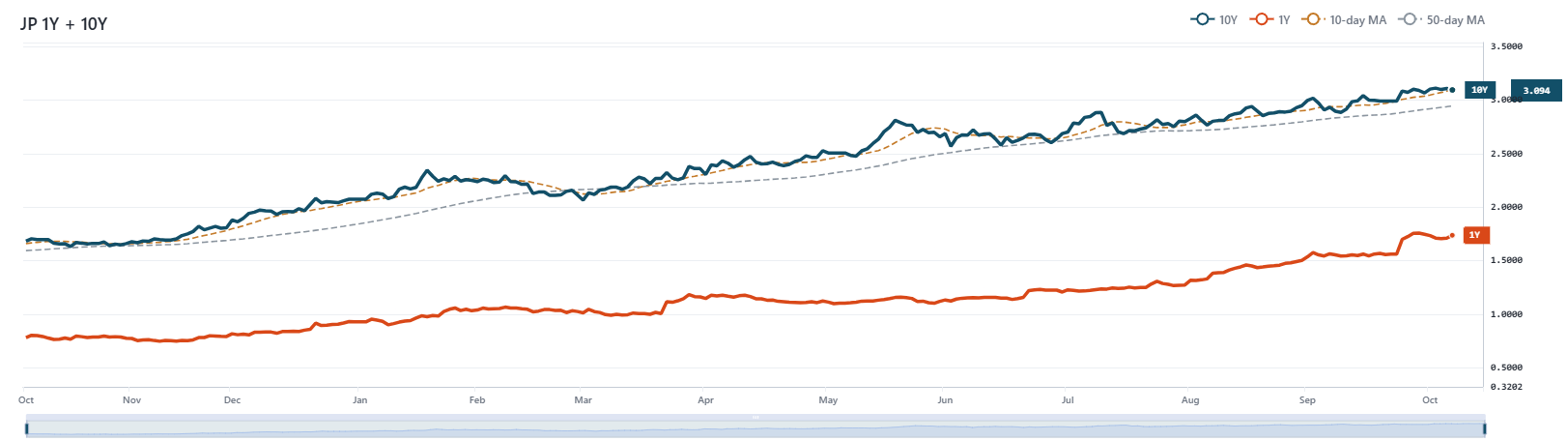
In the associated bond market, the benchmark 10-year Japanese Government Bond yield broke violently from its historical stagnation, surging aggressively to 2.38 percent by late March 2026. This dramatic steepening of the yield curve was initially catalyzed by the Bank of Japan’s definitive transition away from zero-interest-rate policies.
However, the sharp acceleration of yields in the 1st quarter of 2026 was heavily influenced by domestic fiscal policy dynamics. Prime Minister Takaichi’s expansive “Sanaenomics” agenda has severely heightened sovereign debt concerns. Consequently, global investors have begun demanding substantially higher risk premiums to absorb the anticipated flood of new government debt issuance. Looking forward to the upcoming 7 weeks, domestic bond markets will likely remain under immense downward price pressure.
The associated stock market exhibited a spectacular, yet ultimately fragile, trajectory. The Nikkei 225 index rallied aggressively through late 2025 and early 2026, touching an incredible all-time high of 59,332 points in February. This euphoric “Takaichi trade” was fueled by ongoing corporate governance reforms, highly resilient corporate earnings, and massive government subsidies for the domestic semiconductor and artificial intelligence sectors.
Nevertheless, this bullish landscape fractured violently in late February and March 2026 following the outbreak of the US-Iran war. The Nikkei 225 plummeted over 8 percent in a matter of weeks, settling near 53,373 points. The profound energy shock terrified institutional investors who are acutely aware of Japan’s heavy reliance on imported energy.
Associated commodity markets rapidly became the global epicenter of systemic financial risk. With the critical Strait of Hormuz effectively closed, global crude oil prices skyrocketed. Because Japan structurally imports an astounding 94 percent of its crude oil from the Middle East, the sudden commodity squeeze directly threatened corporate profit margins and domestic household consumption. Conversely, domestic gold and platinum tracking funds witnessed record capital inflows as investors desperately sought safe-haven assets to hedge against localized stagflation.
In the associated currency market, the Japanese yen remained fundamentally impaired. Even with the Bank of Japan’s benchmark rate hike to 0.75 percent, the real interest rate differential against the US dollar remained profoundly negative, encouraging persistent carry trade outflows.
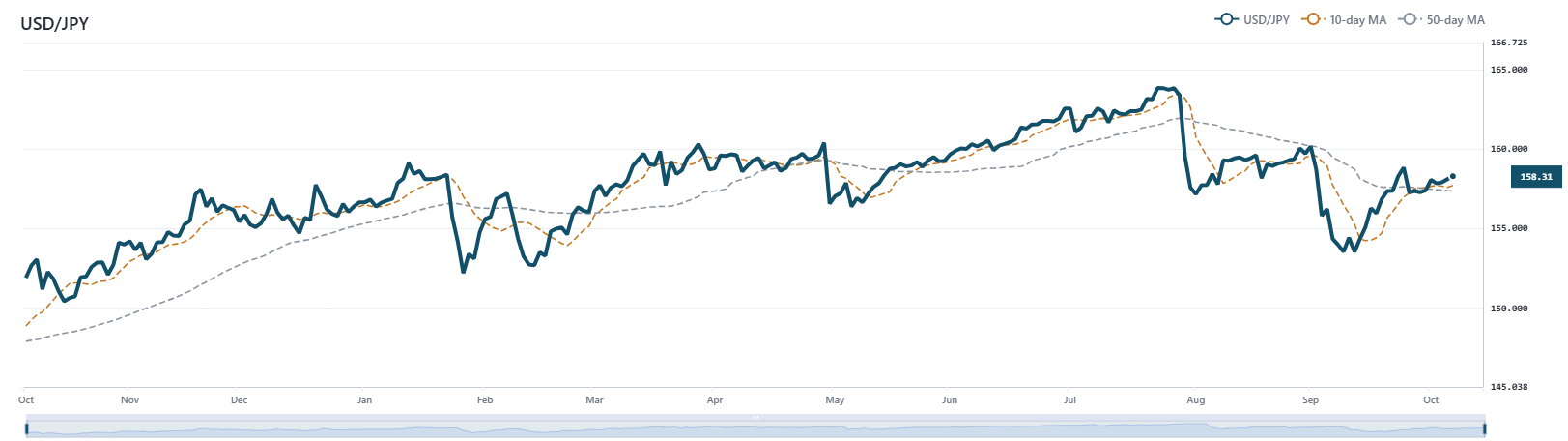
The USD JPY exchange rate hovered dangerously near the 160 threshold throughout March 2026. This was driven higher by resilient US economic data and massive capital outflows associated with Japan’s soaring energy import bills. Over the upcoming 7 weeks, forex traders will focus acutely on the high probability of direct currency intervention by the Ministry of Finance if the 160 level is decisively breached.
The 10-year JGB yield spiked dramatically to 2.38 percent in March 2026, reflecting compounding macroeconomic pressures from central bank tightening and severe fiscal deficit fears.
The Nikkei 225 achieved a historic record of 59,332 points on structural reform optimism before collapsing to 53,373 points amid the exogenous shock of the Middle East conflict.
The US-Iran war fundamentally disrupted global energy commodity markets, placing immense stagflationary pressure on the Japanese economy due to its 94 percent reliance on Middle Eastern crude oil.
USD JPY remains perilously elevated near the 160 mark, as the deeply negative real interest rate differential vastly overrides the nominal policy tightening delivered by the BOJ.
Safe-haven commodity assets, including physical gold and platinum ETFs listed in Tokyo, experienced unprecedented domestic inflows as investors sought protection against imported inflation.
Structural Resilience Amidst Trade Shifts
The Japanese economy, firmly established as the 4th largest globally, has demonstrated profound structural resilience over the past 7 months. This comes despite facing overlapping macroeconomic headwinds from international trade disputes and severe commodity supply shocks.
The underlying structure of the economy is heavily weighted toward high value-added manufacturing and advanced technologies. Key industries encompass automotive production, industrial robotics, precision electronics, and cutting-edge semiconductor fabrication. Japan maintains highly critical trading partnerships with China, the United States, South Korea, and Australia. Recently, regional supply chains have undergone a massive strategic realignment as the government heavily incentivizes domestic capacity building for critical and emerging technologies.
Economically, the data over the previous 7 months highlighted a highly volatile recovery path. In the 3rd quarter of 2025, real gross domestic product unexpectedly contracted by 2.3 percent on an annualized basis. This severe contraction was primarily dragged down by a sharp drop in residential investment and remarkably soft net exports.
However, the 4th quarter of 2025 witnessed a resilient technical rebound, with gross domestic product expanding by 1.3 percent annualized. This equates to a 0.3 percent quarter-over-quarter growth rate. This critical recovery was robustly underpinned by a resurgence in business fixed investment, which jumped 1.2 percent, reflecting incredibly strong corporate balance sheets.
The domestic labor market remained exceptionally tight throughout this period, with the headline unemployment rate hovering at just 2.7 percent in January 2026. The jobs-to-applicants ratio remained highly elevated at 1.18, signaling sustained structural demand for workers across both the manufacturing and services sectors.
Looking ahead to the upcoming 7 weeks, the fundamental macroeconomic outlook hinges entirely on the intersection of robust domestic wage growth and surging external inflation. Headline consumer price inflation actually cooled to 1.3 percent year-on-year in February 2026, largely aided by massive government energy subsidies.
Yet, the recent explosion in global crude oil prices threatens to sharply reverse this disinflationary trend. On the international trade front, Japan defied expectations by posting a surprise trade surplus of 57.27 billion JPY in February 2026. Market participants cautiously forecast that economic growth will stabilize around 0.4 percent in the 1st quarter of 2026.
Japan’s gross domestic product rebounded by 1.3 percent annualized in Q4 2025, recovering sharply from a tariff-induced contraction in Q3, driven almost entirely by robust corporate capital expenditure.
The domestic labor market remained structurally tight, with unemployment holding at 2.7 percent in January 2026, supporting the historic 5.26 percent wage hikes achieved in the spring negotiations.
Headline consumer inflation cooled to 1.3 percent in February 2026 due to extensive government energy subsidies, but the recent global oil shock presents severe, immediate upside risks.
A surprise trade surplus of 57.27 billion JPY was recorded in February 2026, defying widespread expectations of a deficit, as export growth sustained momentum despite global geopolitical headwinds.
Bilateral trade dynamics are shifting rapidly, with the US and Japan announcing massive joint investments in energy and critical minerals to circumvent vulnerable supply chains.