

The first week of October maintained a delicate equilibrium, as geopolitical friction in the Middle East and elevated energy costs tested global risk sentiment. While the dollar secured steady gains, an unusually soft American jobs report tempered expectations for immediate monetary tightening.
Looking ahead, traders face a landscape defined by European fiscal strain, a resolutely hawkish Bank of England, and critical domestic economic releases that will dictate the next alignment of institutional capital.
Market Retrospective
Labour Dynamics and Dollar Footing
Early October revealed a moderating American labour market. On October 2, the September Non-Farm Payrolls print of 29,000 fell substantially below the 90,000 consensus.
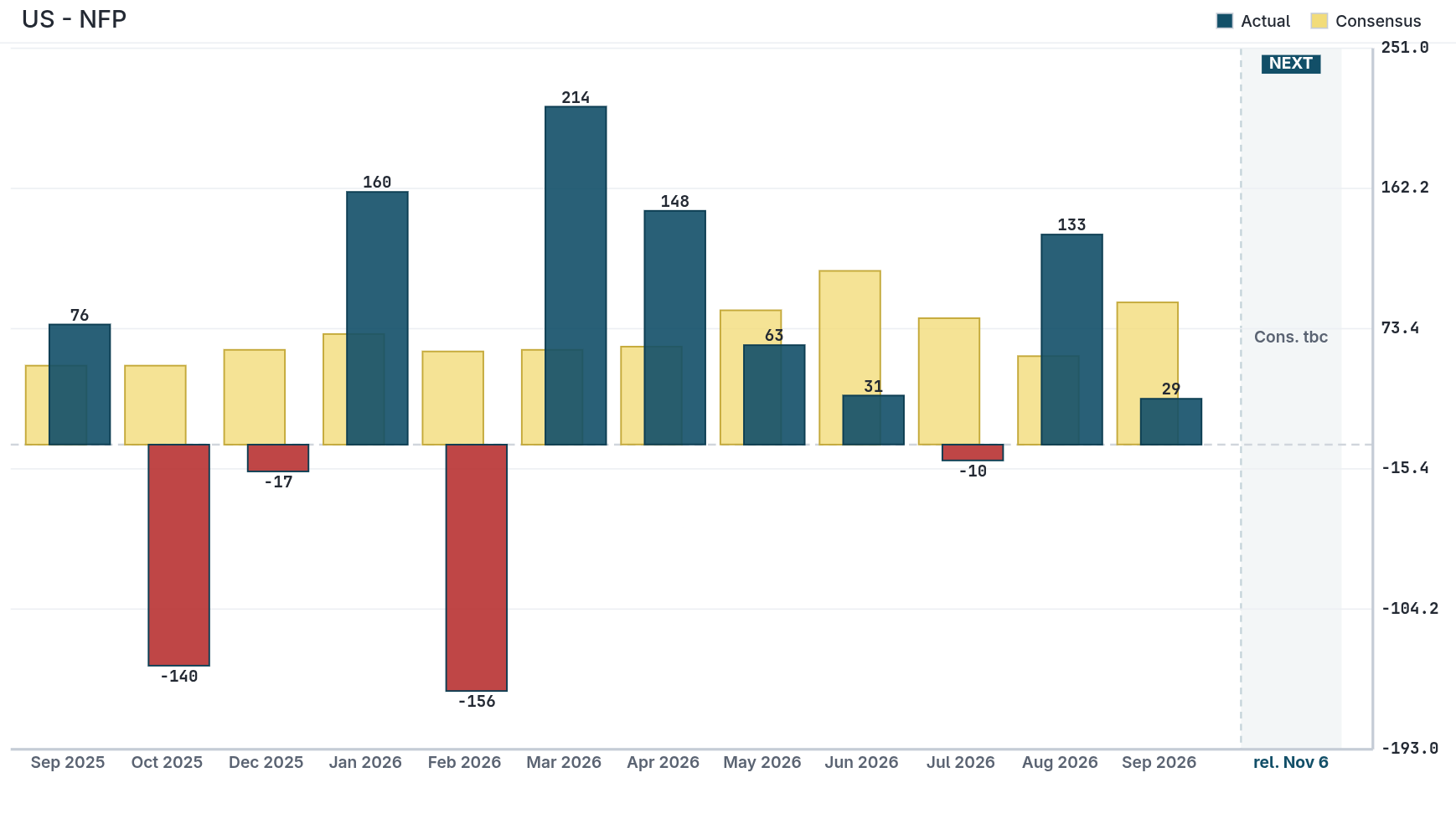
This easing, alongside October 9 data showing University of Michigan year-ahead inflation expectations firming to 4.7%, tempered expectations for immediate Federal Reserve tightening.
Nevertheless, the greenback maintained a firming profile. As US 10-year Treasury yields remained elevated near 5.23% on October 9, the dollar retained its yield advantage, keeping pairs like EUR/USD under pressure.
European Strain and British Resilience
Across the Channel, the euro weakened beneath the weight of French fiscal vulnerabilities. The Financial Times reported warnings from the French central bank chief that the state risks being “strangled by interest rates”, while The Wall Street Journal noted the Finance Minister’s readiness to circumvent parliament to pass spending cuts. This political deadlock pushed French sovereign yields higher, creating a softening environment for the single currency. Conversely, the British pound demonstrated formidable fortitude. UK 10-year gilt yields advanced to multi-decade highs near 5.44% on October 9, supported by Bank of England policymakers who warned that inflation has become embedded in the domestic economy.
Resource Bloc Developments and Risk Sentiment
In Canada, an October 9 employment report revealed a contraction of 68,300 jobs against a 7,000 consensus estimate, lifting the unemployment rate to 6.5%.
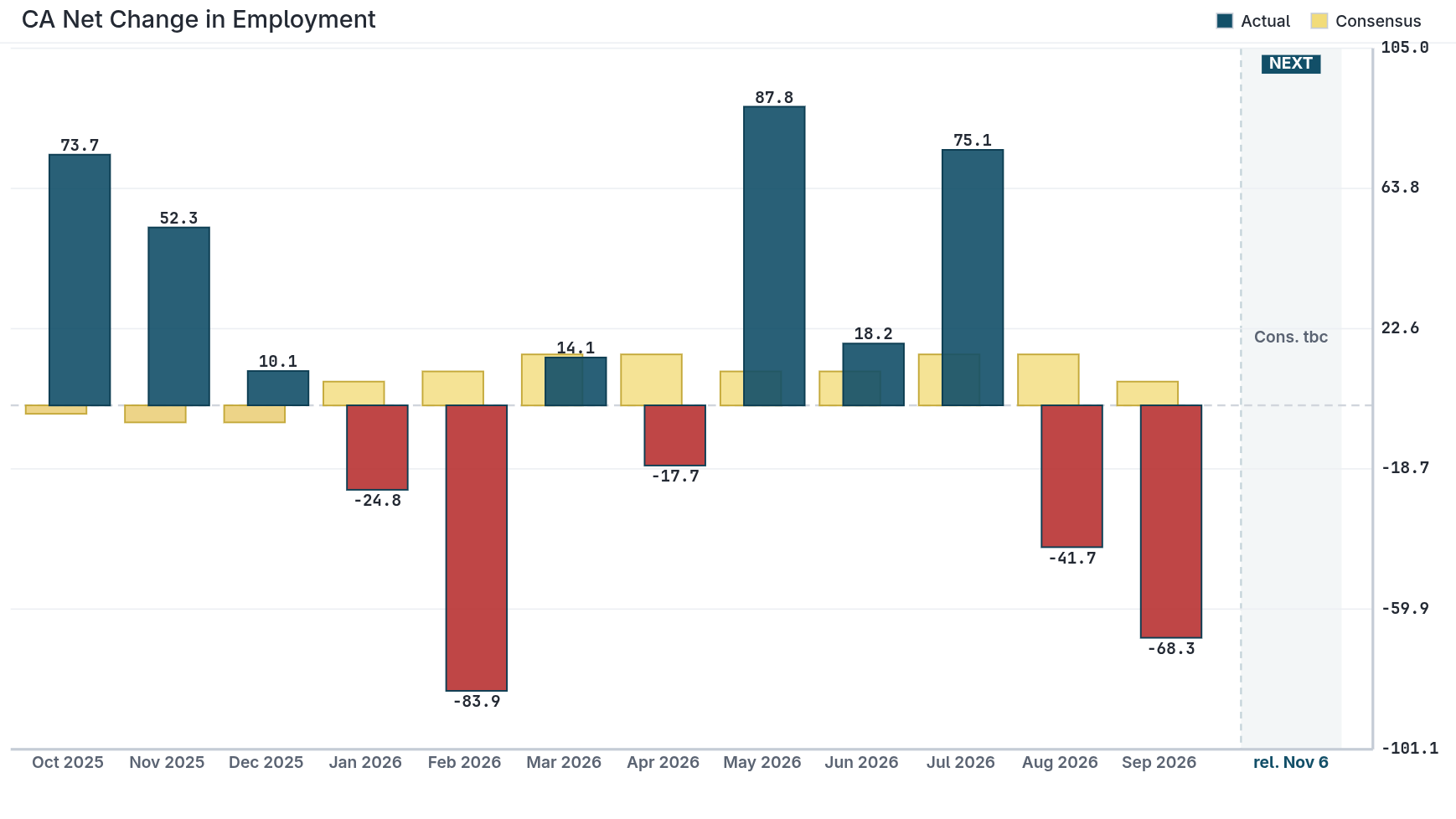
This domestic softening kept the Canadian dollar on a cautious footing. Meanwhile, global risk appetite remained under pressure; as Houthi strikes in the Strait of Hormuz and broader Middle Eastern friction dominated headlines, Brent crude firmed near $102.88 on October 9, elevating imported energy costs and weighing on risk-sensitive commodity currencies.
Outlook
The Dollar’s Measured Path
The greenback enters mid-October projecting a slightly strong, hold-then-firm posture. With interest-rate markets assigning an 82.8% probability to an October 28 Federal Open Market Committee pause, desk attention turns to the October 15 US Retail Sales Control Group release. Following a prior 1.4% month-over-month expansion, a print confirming consumer resilience could reinforce the dollar’s underlying strength and broader macro relevance. Evaluate long setups on shallow pullbacks, observing the USD basket’s technical stance.
European Dilemmas and Sterling Fortitude
The euro faces a slightly weak, hold-then-fade trajectory. Lingering sovereign debt anxieties in Paris and the burden of expensive imported energy continue to weigh on the common currency. With markets pricing an 88.7% probability of an European Central Bank pause on October 29, the October 14 speech by ECB President Lagarde serves as a critical catalyst for setting the monetary tone. Evaluate short euro setups if EUR/USD fails to overcome near-term resistance around its 10-day moving average (-0.51% baseline), as regional fiscal strains limit upward mobility.
The British pound, by contrast, displays a slightly strong, grind-then-fade path. Swaps currently price an 86.2% probability of a rate hike by the Bank of England on November 5. Watch for dip-buying interest on retracements toward the October 9 GBP/USD close of 1.3228. Persistent domestic inflation concerns and elevated gilt yields keep the currency supported, rendering it an attractive prospect against softer European peers.
Shifts Across the Resource Economies
The Australian dollar remains neutral along a range-then-drift path. Markets assign a 68.7% probability of a Reserve Bank of Australia pause in November. Monitor the October 15 Australian Employment Change release—forecasted at 20,000 against a prior 39,500—to establish the next directional break. A moderation in hiring could ease rate expectations; thus, operators should evaluate range-bound setups near the AUD/USD October 9 close of 0.6984.
The Canadian dollar retains a neutral, grind-then-firm profile. Following recent labour market weakness, markets price a 68.2% probability of a Bank of Canada rate hold on October 28. Evaluate short Canadian dollar setups against firmer peers near the October 9 USD/CAD high of 1.4298. Meanwhile, the New Zealand dollar preserves a neutral, pause-then-inflect path. With markets pricing a 58.3% probability of a central bank rate hike on October 28, operators should prepare for a potential shift following the October 21 quarterly CPI release (prior 1.5% quarter-over-quarter), which will carry significant macro relevance for the antipodean rate path.
Calm and Caution in Safe Havens
Safe-haven currencies remain closely tethered to global headline risk. The Swiss franc displays a neutral, firm-then-fade outlook, buoyed by active geopolitical regime stress in the Middle East and an 82.1% probability that the Swiss National Bank maintains its policy rate in December. The Japanese yen also maintains a neutral, range-then-drift stance. With the Bank of Japan priced at a 90.4% probability of holding rates on October 30, the currency balances elevated domestic inflation against the wider US-Japan rate differential. Evaluate balanced setups around the USD/JPY 10-day moving average (-0.17% baseline). Finally, traders should monitor the International Energy Agency meetings on October 14-15 regarding the G7 diesel and oil stock releases, as any policy adjustments will directly influence energy import burdens and broader risk sentiment.
Fundamental Analysis pages to bookmark…
DISCLAIMER: This site is informational only, NOT financial advice. Trading involves risk, and you could lose money.