
Policy Pauses and Energy Tremors

A Fractured Tightening Cycle
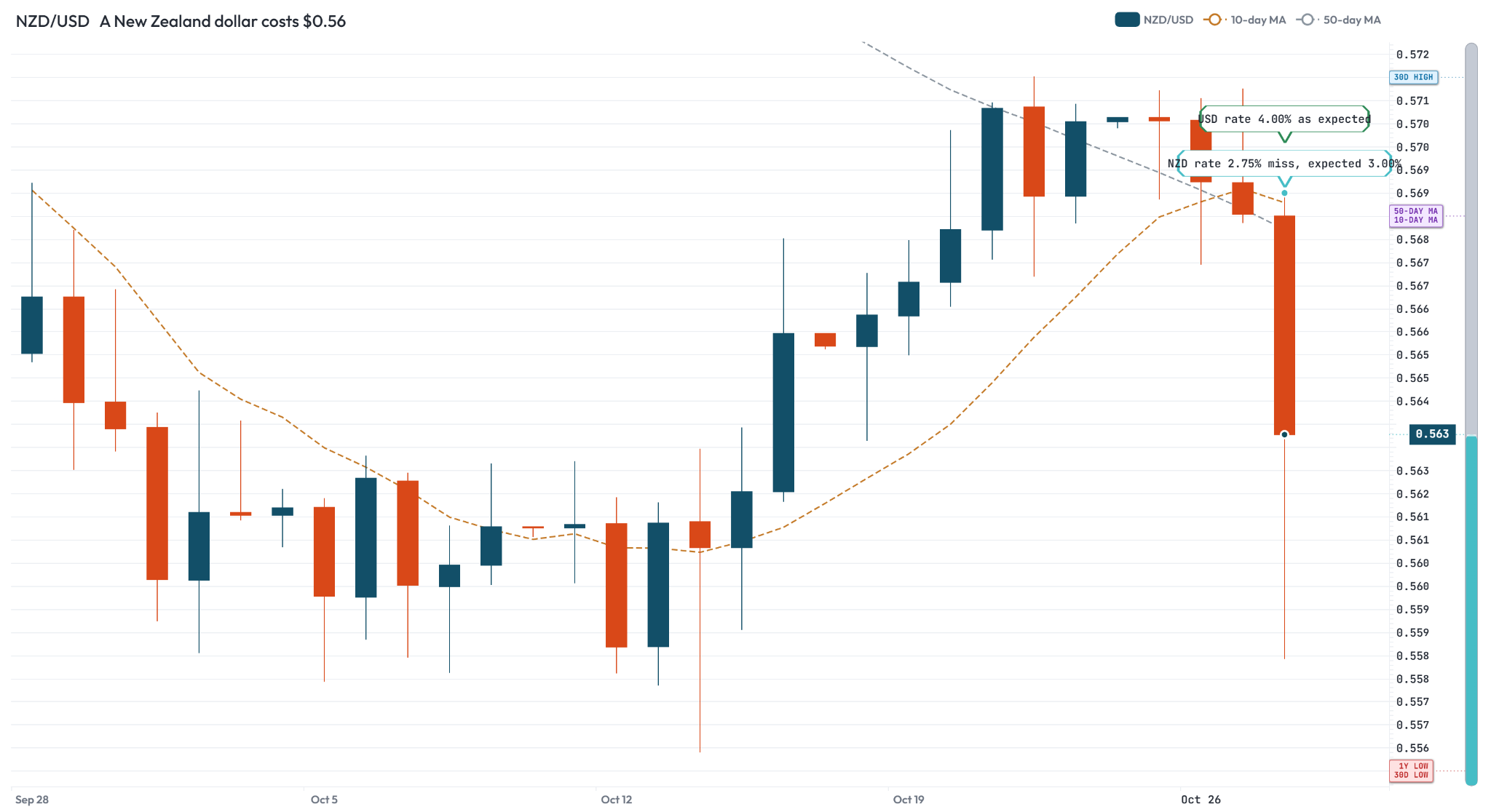
Global currency markets are shifting away from the US dollar and the euro towards currencies backed by assertive central banks. Last week’s policy announcements highlighted growing divergence among major economies. The Bank of Canada raised its overnight lending rate to 2.50% to curb energy-driven price pressures. Conversely, the Reserve Bank of New Zealand surprised observers with a 4–3 vote to maintain its policy rate at 2.75%, prompting a sharp decline in the New Zealand dollar.
Ballots and British Tightening Ahead
The Federal Reserve maintained the target range for the federal funds rate at 3.75%–4.00%, despite data from the U.S. Bureau of Economic Analysis showing third-quarter GDP expanding at an annualized rate of 3.4%. A sell-off in technology shares pushed ten-year Treasury yields down to 4.94%. Meanwhile, the European Central Bank kept its benchmark rate at 2.50% following news of President Christine Lagarde’s planned early departure, and the Bank of Japan left its policy rate unchanged at 1.25%. Attention now turns to upcoming interest rate decisions in Britain and Australia, alongside US midterm elections and labor market data.
The Midterm and Monetary Gauntlet
Sterling Strength Versus Greenback Liquidation
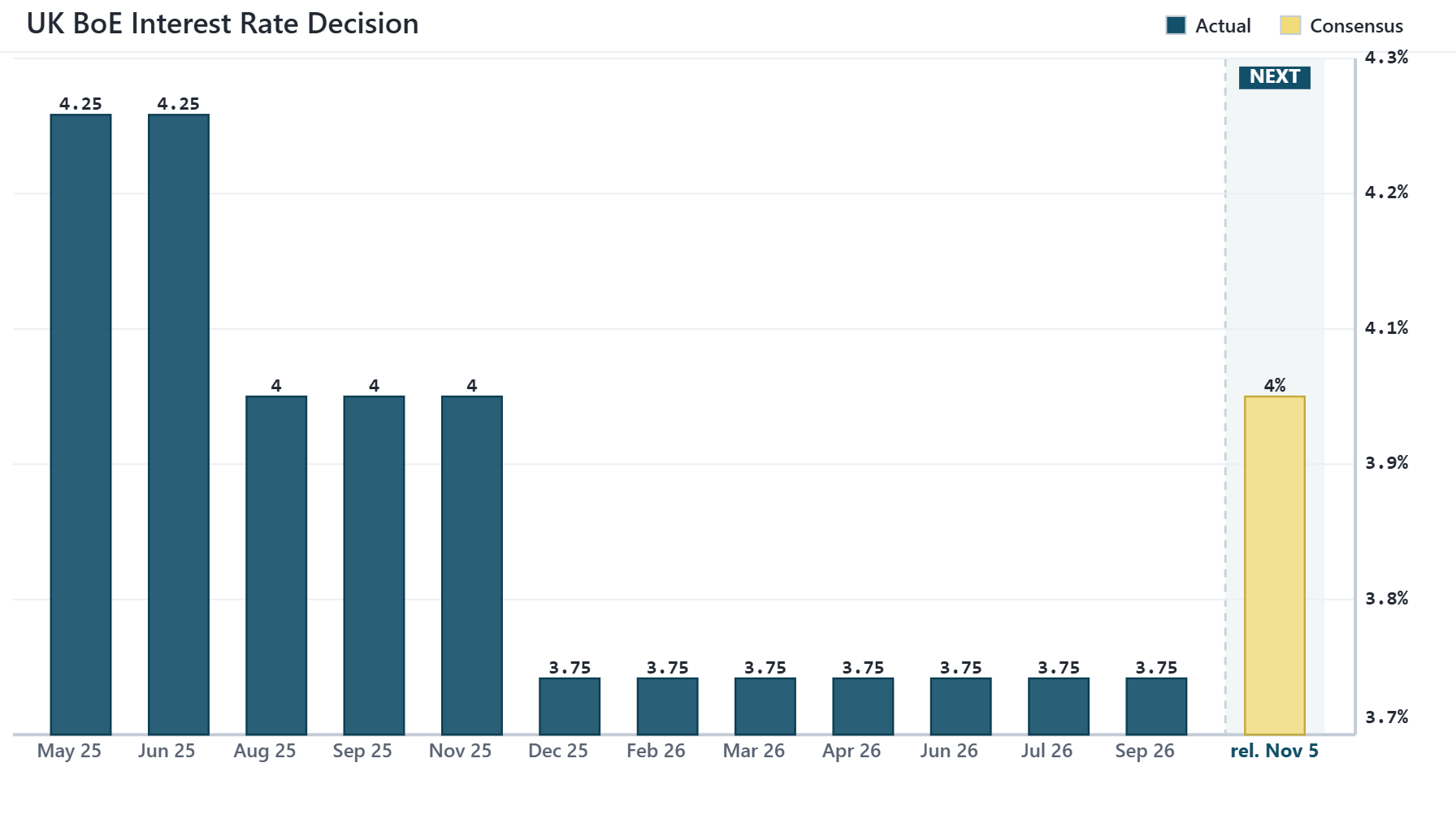
Sterling enters the week supported by strong market demand ahead of the Bank of England’s upcoming meeting, where interest rate swaps fully price in a quarter-point increase to 4.00%.
Investor sentiment has been bolstered by Chancellor John Healey’s autumn budget and figures from the Office for National Statistics showing a 102,000 increase in three-month employment. According to positioning data from the Commodity Futures Trading Commission, net short positions in sterling sit at the 2nd percentile, leaving scope for further buying. By contrast, the US dollar faces headwinds from declining Treasury yields and softer consumer confidence metrics, while speculative net long positioning at the 58th percentile leaves the currency vulnerable to unwinding around the US midterm elections and official non-farm payroll reports.
Continental Drag and Loonie Resilience
In Europe, the euro remains under pressure near $1.12. Weakness in services activity and elevated crude prices following supply disruptions in the Strait of Hormuz continue to weigh on the economic outlook, ahead of the Eurozone’s upcoming inflation release. In North America, the Canadian dollar has been supported near 1.40 per US dollar by crude oil prices, with Brent remaining above $111 per barrel after OPEC+ decided to keep production targets unchanged, ahead of employment statistics from Statistics Canada.
Pacific Binary Risks and Range-Bound Havens
In Asia-Pacific, the New Zealand dollar remains weak ahead of domestic labor market data and the upcoming general election. Meanwhile, trading in the Australian dollar, Swiss franc, and Japanese yen reflects mixed influences. Interest rate futures imply an 84.6% probability of a rate increase by the Reserve Bank of Australia following consumer price index data from the Australian Bureau of Statistics showing annual inflation at 4.3%, though recent employment losses have tempered market expectations.
Winter Energy Premiums and December Pricing
Geopolitical Chokepoints and Sovereign Spreads
Looking ahead to late November, foreign exchange movements will depend on whether persistent energy inflation prompts coordinated policy tightening in December. Financial markets currently assign an 81.6% probability to a rate hike by the European Central Bank, an 80.9% chance for the Bank of Japan, and a 72.9% likelihood for the Federal Reserve. Analysts at Goldman Sachs note that higher capital costs in the technology sector and fiscal concerns in France have widened credit spreads, driving capital into government bond markets. Geopolitical developments, including diplomatic discussions in Doha and the upcoming G20 summit, remain key considerations for global market stability.
Fundamental Analysis pages to bookmark…
DISCLAIMER: This site is informational only, NOT financial advice. Trading involves risk, and you could lose money.