
High Yields and Energy Reshape Global FX

The week that was
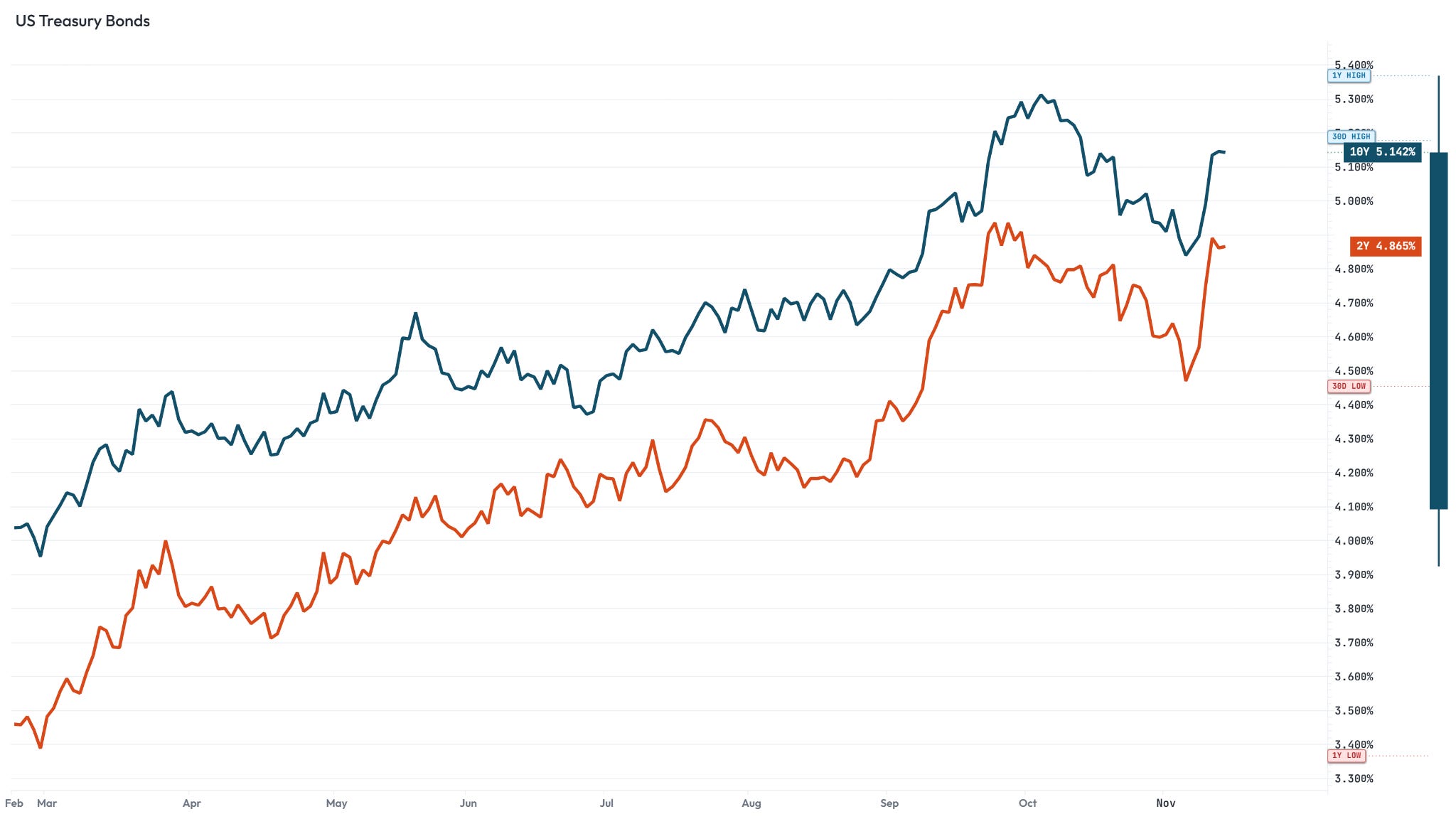
Hopes of an early end to rate hikes were dashed last week as stubborn inflation pushed government bond yields sharply higher across North America and Britain. In Washington, consumer prices rose 0.4% in October, while core inflation picked up by 0.3%. The figures prompted Federal Reserve Governor Christopher Waller to suggest that a half-point rate increase remains on the table for December. Ten-year Treasury yields jumped 25 basis points to 5.14%, with markets quickly pricing in further tightening.
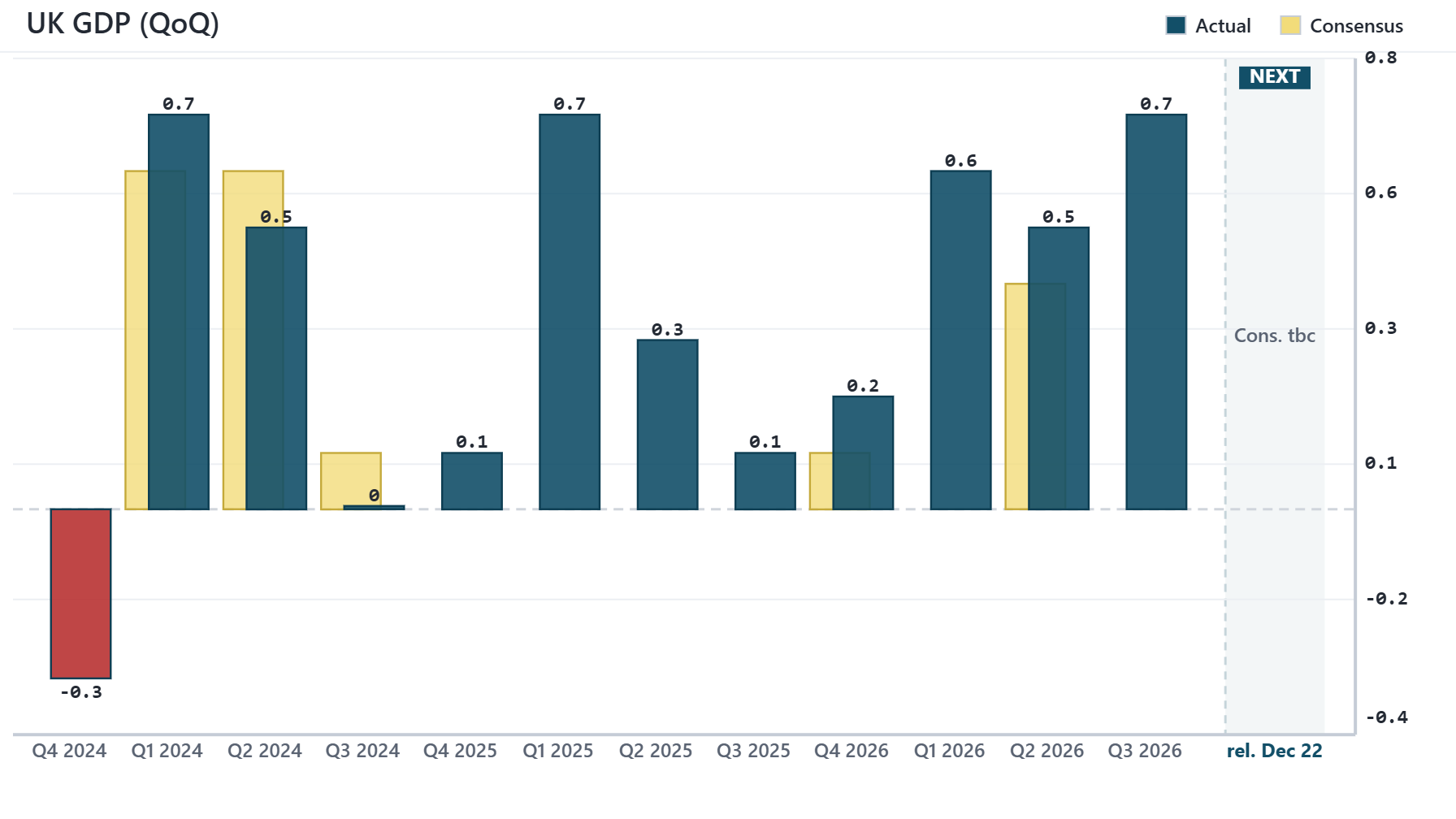
In London, Britain reported robust third-quarter growth of 0.7%, driving ten-year gilt yields to 5.34% after Deputy Governor Clare Lombardelli pointed to ongoing wage pressures.
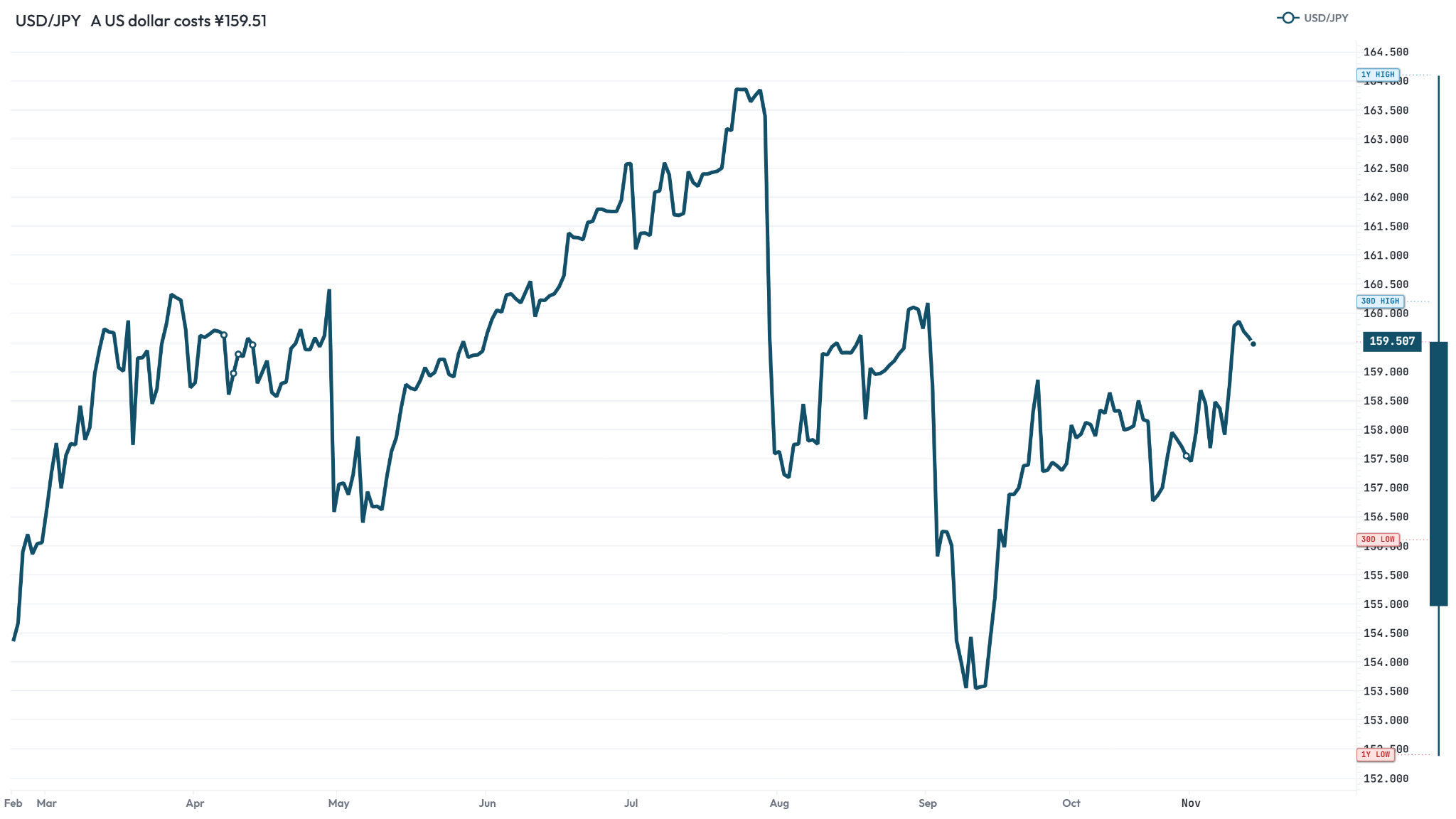
Japan, by contrast, faltered. Its economy barely grew in the third quarter as household spending shrank 0.3%. Despite hawkish remarks from central bank official Hajime Takata, the yen neared 160 against the dollar, illustrating the growing yield penalty facing low-rate economies.
Short-term outlook: The days ahead
The coming days will test how higher energy costs ripple through broader prices alongside a busy lineup of economic data. Canada opens the week with its October inflation report, which will clarify whether price pressures warrant another rate hike following October’s increase to 2.50%. Tuesday brings American retail sales and New Zealand’s survey of inflation expectations, followed on Wednesday by final European core inflation numbers and minutes from the Federal Reserve’s latest meeting.
These figures will sharpen the contrast between rate-setting leaders and lower-yielding currencies. Capital continues to favor the Canadian dollar over the Japanese yen. Canada’s $5.4bn trade surplus and a 62% chance of a December rate hike stand in stark contrast to Japan’s economic stall and the severe strain imported energy costs place on its trade balance amid shipping disruptions in the Strait of Hormuz. Investors may look for opportunities to buy the Canadian dollar on dips toward the 111.50 support level.
Meanwhile, the New Zealand dollar looks increasingly attractive against the Swiss franc. Markets see an 88% chance that the Reserve Bank of New Zealand will raise rates by 25 basis points on December 9th, whereas Switzerland’s central bank keeps rates anchored at zero. Given heavy short positions against the kiwi, Tuesday’s inflation expectations data could spark a sharp rally. Traders may track buying opportunities for the kiwi around 0.4628 Swiss francs.
Long-term outlook: The weeks ahead
Looking into early December, currency movements will reflect widening central bank policies and unequal trade pressures. While the Federal Reserve, the Bank of Canada, and the Reserve Bank of New Zealand maintain a tightening bias backed by steady economic expansion, Switzerland and Japan remain constrained by low yields and weak domestic demand. If mine attacks in the Strait of Hormuz keep crude oil above $94 a barrel, imported energy costs will continue to weigh on European and Asian trade balances. Consequently, the Swiss franc and Japanese yen remain vulnerable against higher-yielding North American currencies heading into year-end.
Fundamental Analysis pages to bookmark…
DISCLAIMER: This site is informational only, NOT financial advice. Trading involves risk, and you could lose money.