

The Week That Was
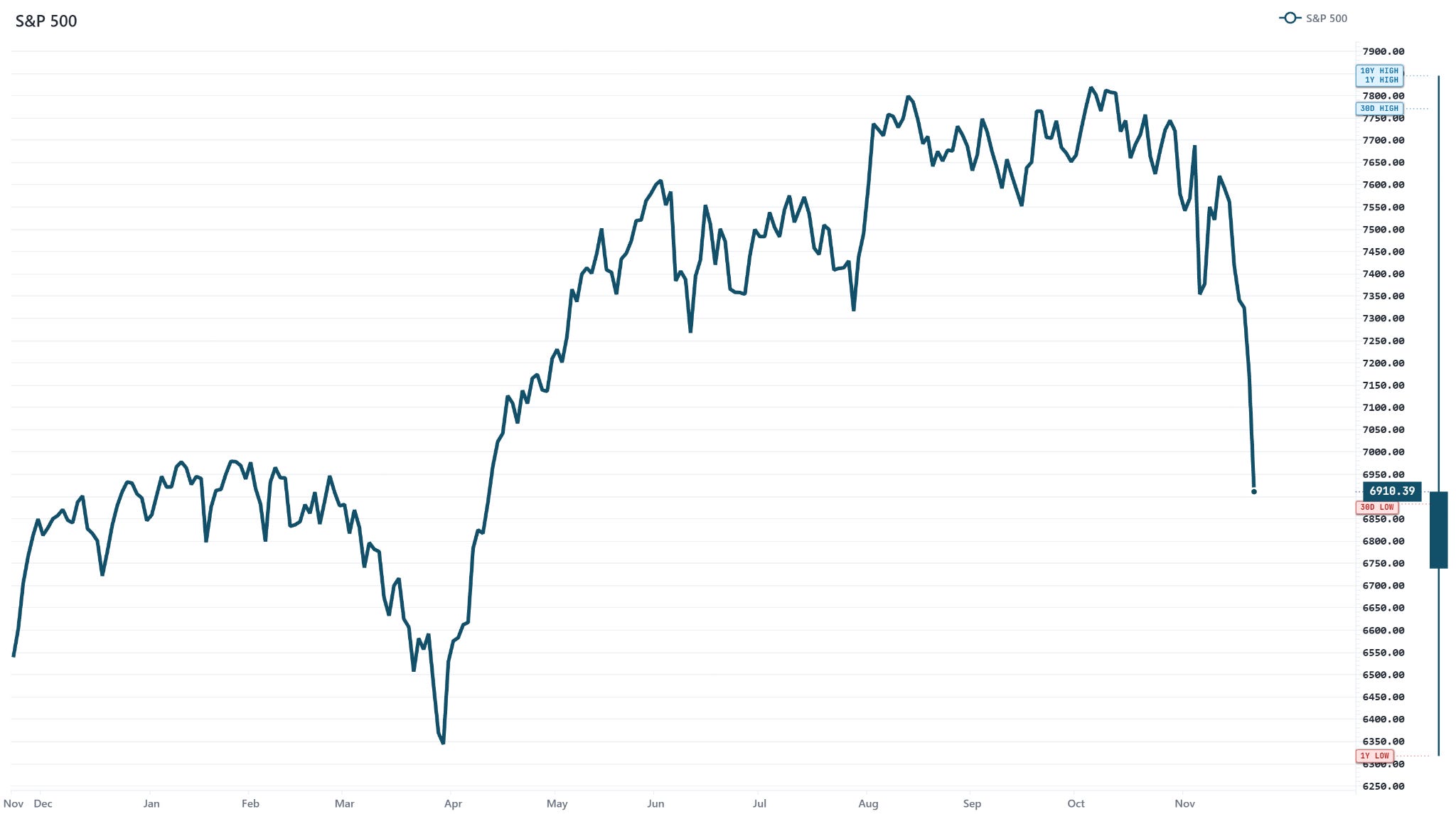
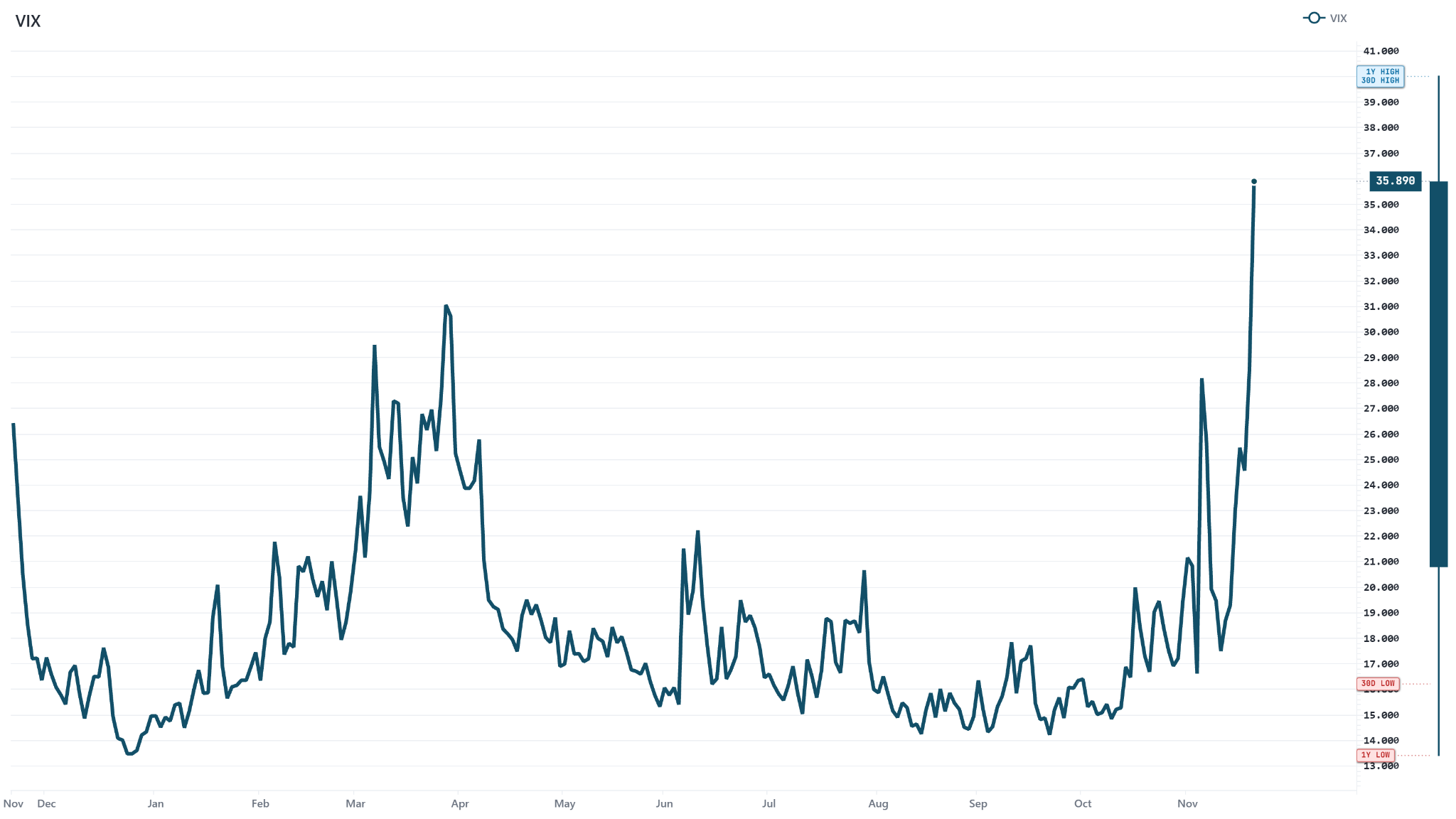
A fierce rout in AI shares rattled global markets last week, dragging the S&P 500 down 11.6% from its October peak to 6,910.39 and vaulting the VIX to 35.89 on Friday.
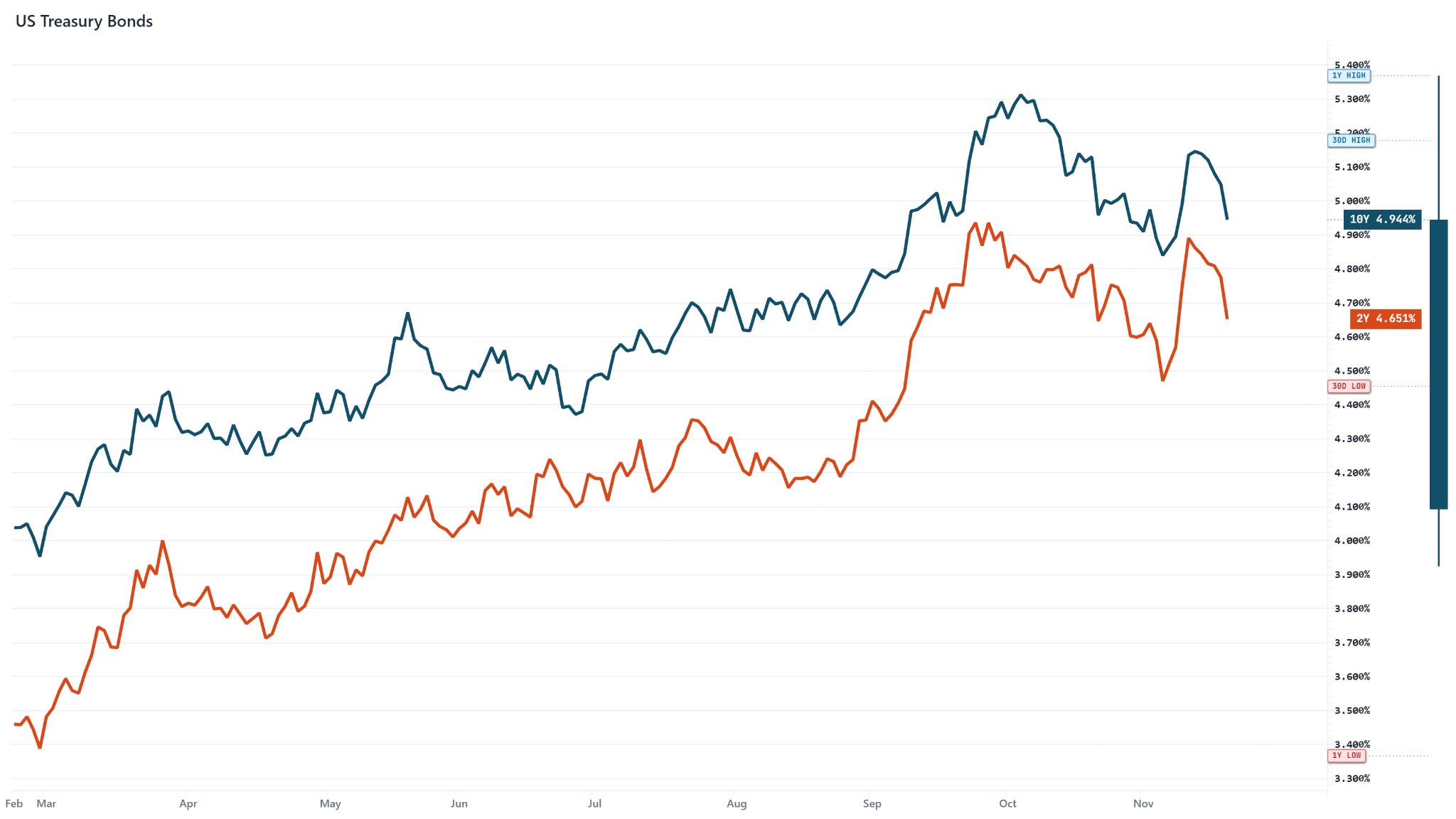
Even as nervous investors piled into government bonds—pulling 10-year US Treasury yields down to 4.94% and UK gilts to 5.24%—expectations for tighter monetary policy barely budged.
Minutes from the Fed’s October meeting, published on Wednesday, November 18, confirmed a 10–2 vote to hold rates alongside a broad consensus for further tightening, leaving markets pricing in roughly 98% odds of a hike on December 9.
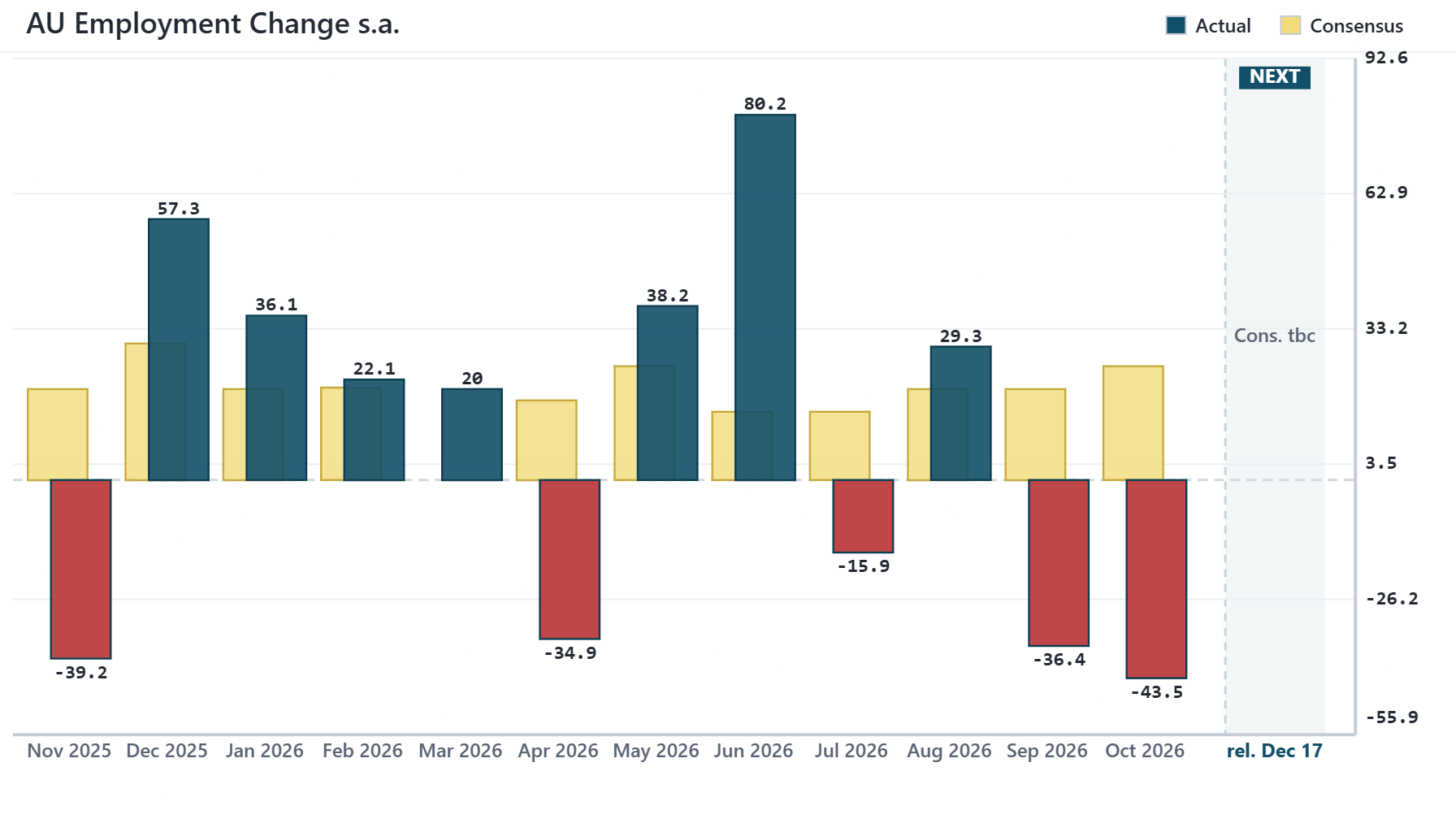
Across Europe, final October figures showing 2.6% core HICP kept odds for a December 17 ECB rate hike above 90%. In Britain, an unexpected 0.7% rebound in October retail sales alongside 3.6% CPI supported roughly 80% market odds of another BoE increase. By contrast, Australia suffered a harsh blow: October employment dropped by 43,500 jobs and unemployment jumped to a five-year high of 4.9%, wiping out remaining RBA rate-hike bets—though markets still price a hold until at least mid-2027—and nudging AUD/USD down to 0.6621.
Meanwhile, Japan’s Q3 GDP stalled at -0.02% quarter-on-quarter (or -0.1% annualised), while Brent crude eased to $90.24 a barrel despite ongoing tanker strikes in the Strait of Hormuz.
The Days Ahead
I expect the coming week to open briskly with New Zealand’s Q3 retail sales late on Sunday, November 22, followed by a decisive Monday, November 23 slate of flash PMIs across the US, the UK, and the euro area. Resilient services readings would reinforce my preference for CHF, GBP, EUR, and USD against weaker peers.
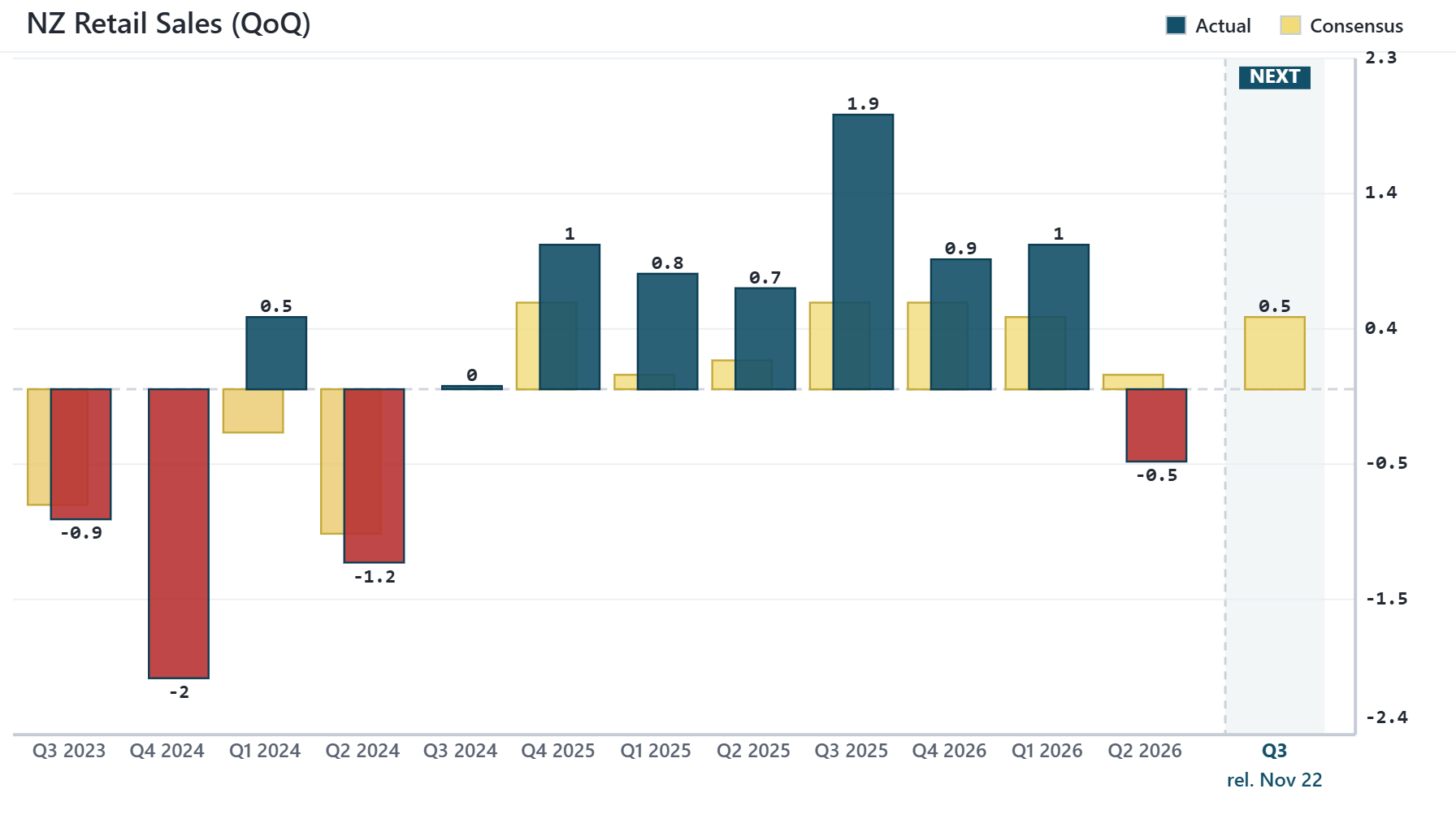
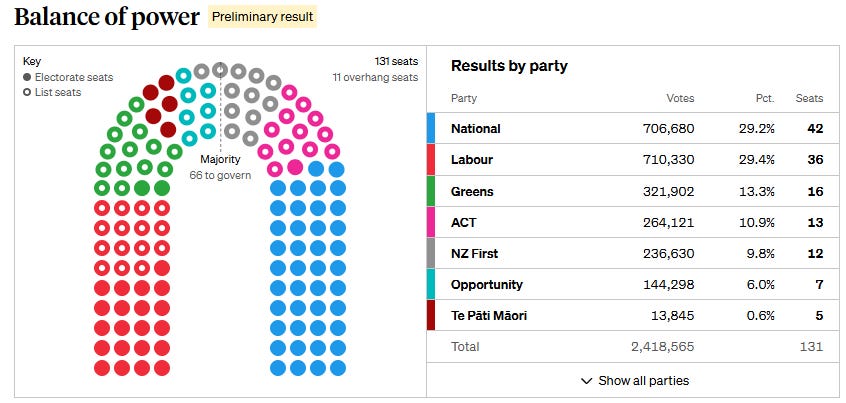
Midweek brings the heaviest event risk before American markets pause for Thanksgiving on Thursday. On Wednesday, November 25, Australia’s October CPI print (following September’s 4.3% reading) will test whether traders overreacted to last week’s dismal jobs report, while the second estimate of US Q3 GDP and October core PCE data will show whether consumer strength justifies hawkish Fed rhetoric. On Thursday, November 26, Tokyo core CPI (forecast at 2.9% for headline and 2.4%–2.7% for core) and the ECB’s October meeting minutes take centre stage, before official general election results in New Zealand are declared on Friday, November 27.
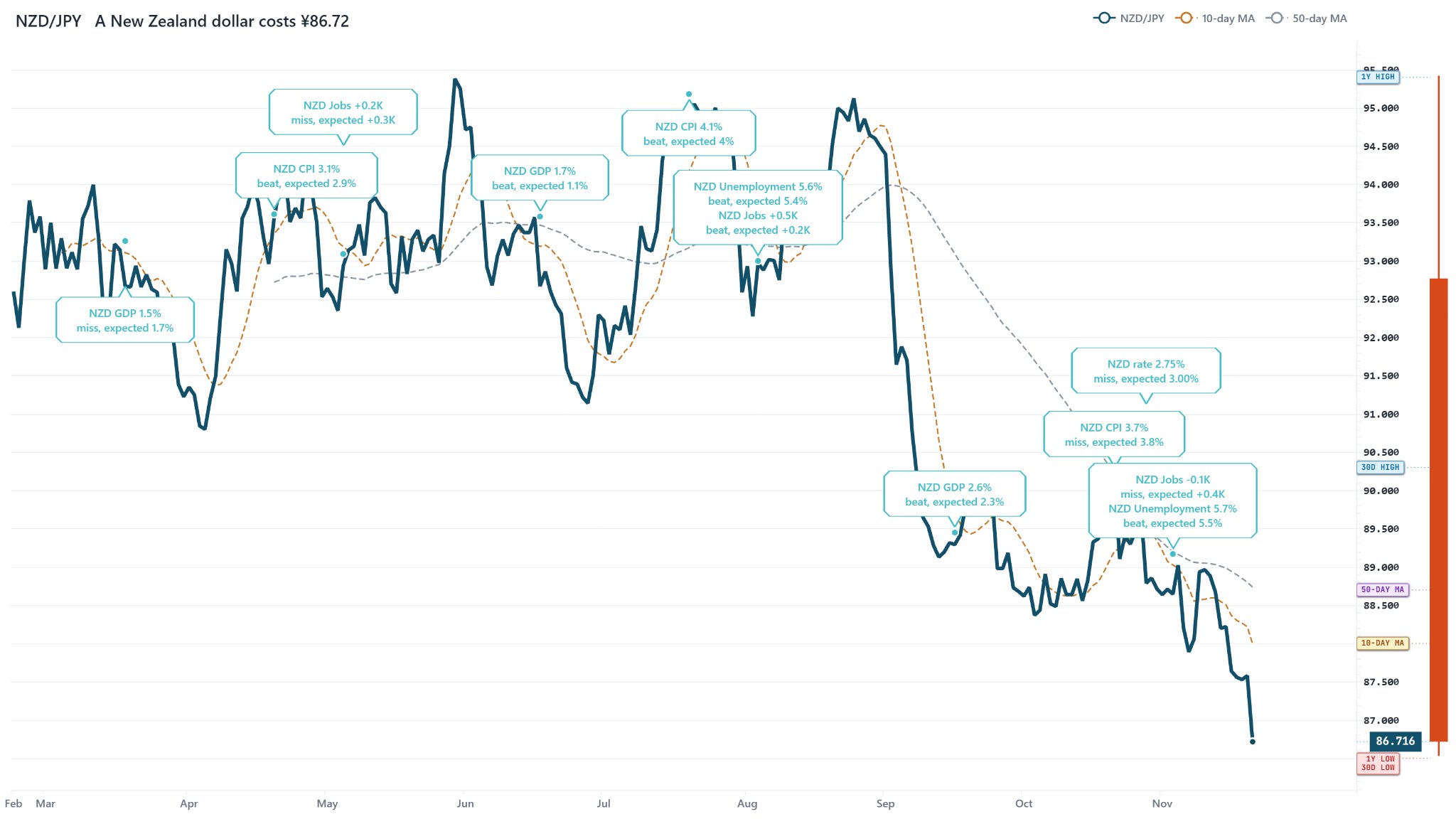
Against this backdrop, I see capital continuing to shun the Australian dollar and the yen, though stretched short positions call for patience on pullbacks. In particular, I am watching NZD/JPY—which closed Friday near 86.70—for signs that firm New Zealand retail figures and expectations of a December RBNZ hike can lift the pair toward the 88.02 level, while monitoring whether a VIX above 24 caps risk appetite.
The Weeks Ahead
Looking toward December’s cluster of central bank meetings, widening policy divergence should dictate currency swings. The Fed, ECB, BoE, and RBNZ remain on a tightening path to contain energy-driven inflation, whereas Switzerland’s franc benefits from safe-haven demand and steady growth despite a 0% SNB policy rate.
Conversely, Australia’s softening labour market and Chinese pressure on commodity prices leave the Aussie exposed, while Japan’s sluggish domestic consumption and reliance on imported fuel keep the yen vulnerable whenever stock-market volatility subsides. In Canada, contained core inflation—with CPI-median at 2.0% and CPI-trim at 1.8%—leaves the BoC finely balanced ahead of its December 9 rate decision.
Fundamental Analysis pages to bookmark…
DISCLAIMER: This site is informational only, NOT financial advice. Trading involves risk, and you could lose money.