

The Week That Was
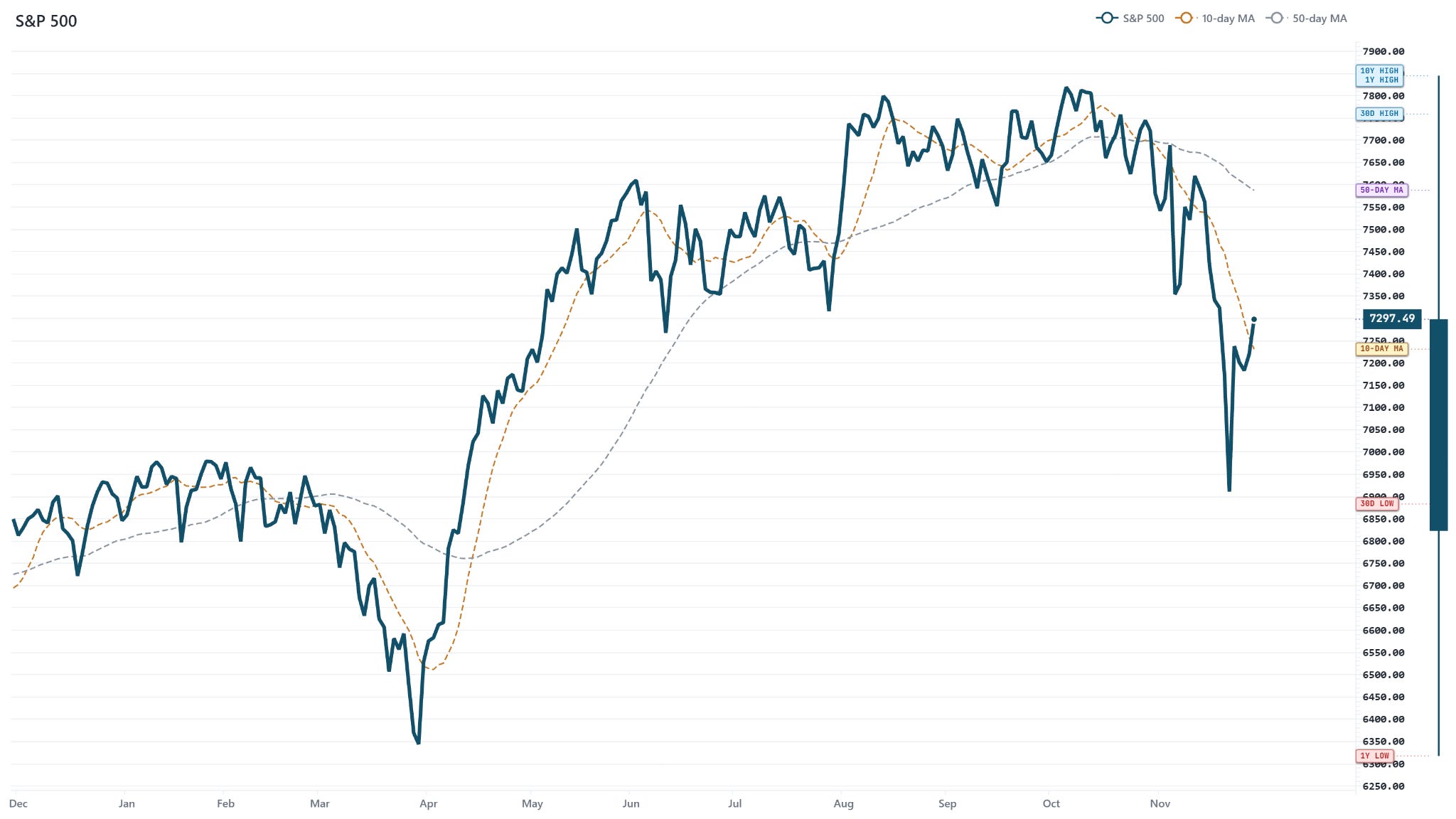
Global equity nerves steadied last week after Nvidia reinstated chief executive Jensen Huang following his brief ouster, lifting the S&P 500 to ~7,300. That still leaves the index 6.7% below its October record high, though it pulled the VIX down to 23.81, just shy of the 24 mark that usually signals acute stress.
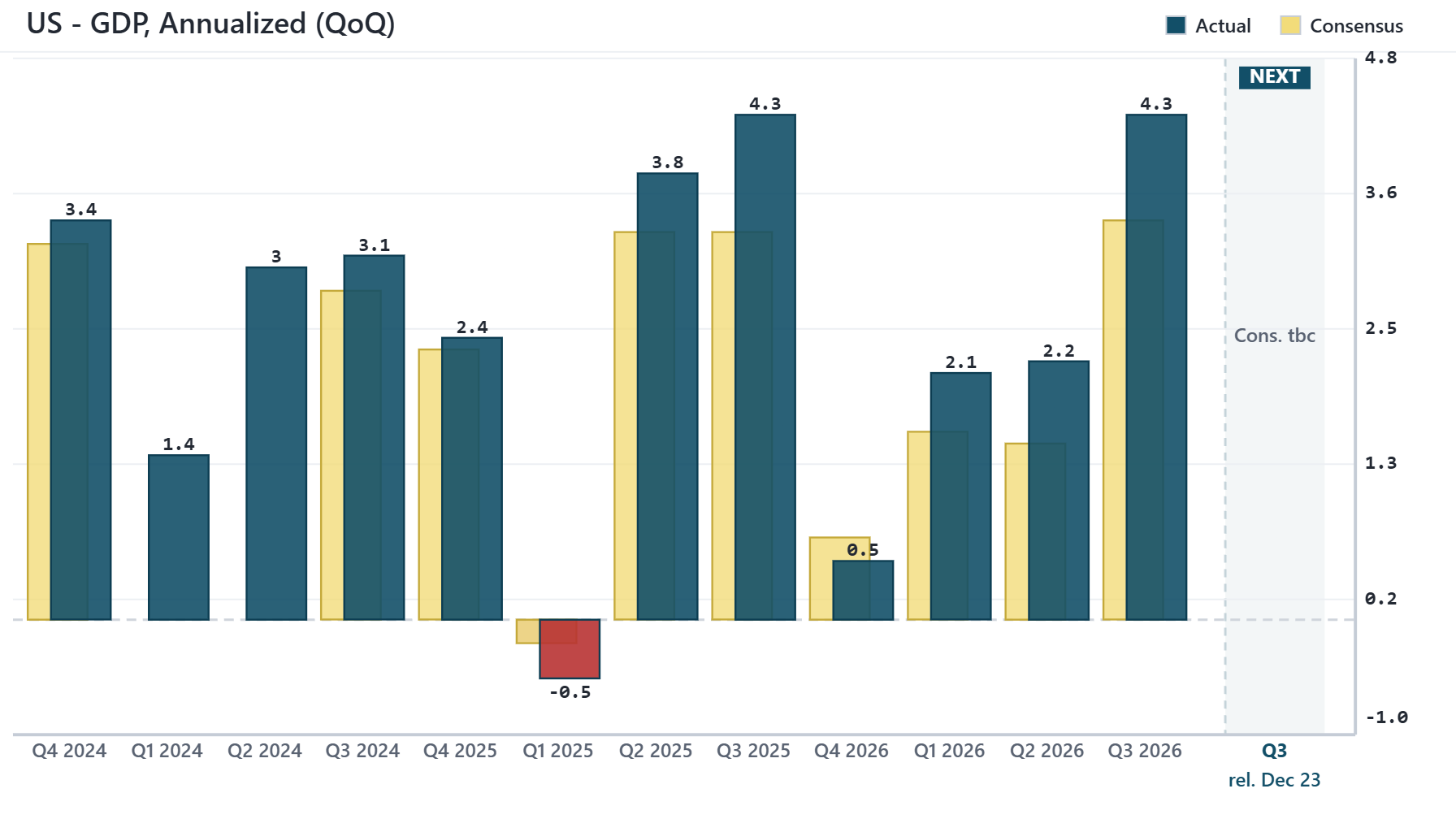
In America, third-quarter GDP was revised up to a brisk 4.3% annualized pace while October core PCE inflation climbed to 3.3% year-on-year. That’s well above the Fed’s 2% target, locking in near-certain OIS odds of a December 9 rate hike alongside 10-year Treasury yields at 4.94%.
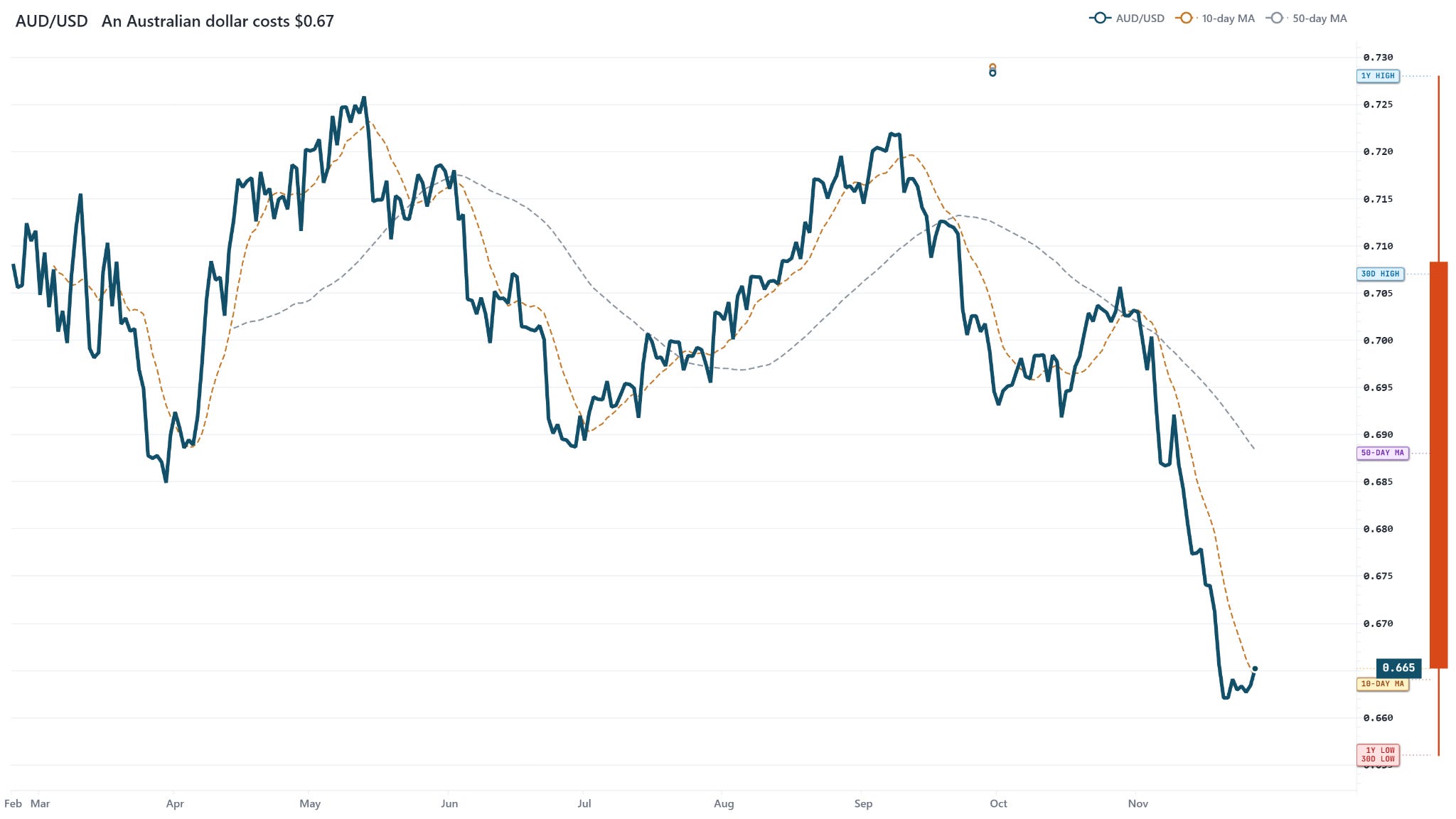
Policy divergence sharpened elsewhere. Australia’s October CPI jumped to 4.9% year-on-year, yet AUD/USD stalled near 0.665 as markets priced a December 8 RBA hold after recent job losses.
New Zealand went the other way. Third-quarter retail sales surged 2.2% quarter-on-quarter, reinforcing strong RBNZ hike odds for December 9. Meanwhile, the yen weakened toward 159.52 per dollar as 10-year JGB yields sat near 2.65%.
Short-Term Outlook: The Days Ahead
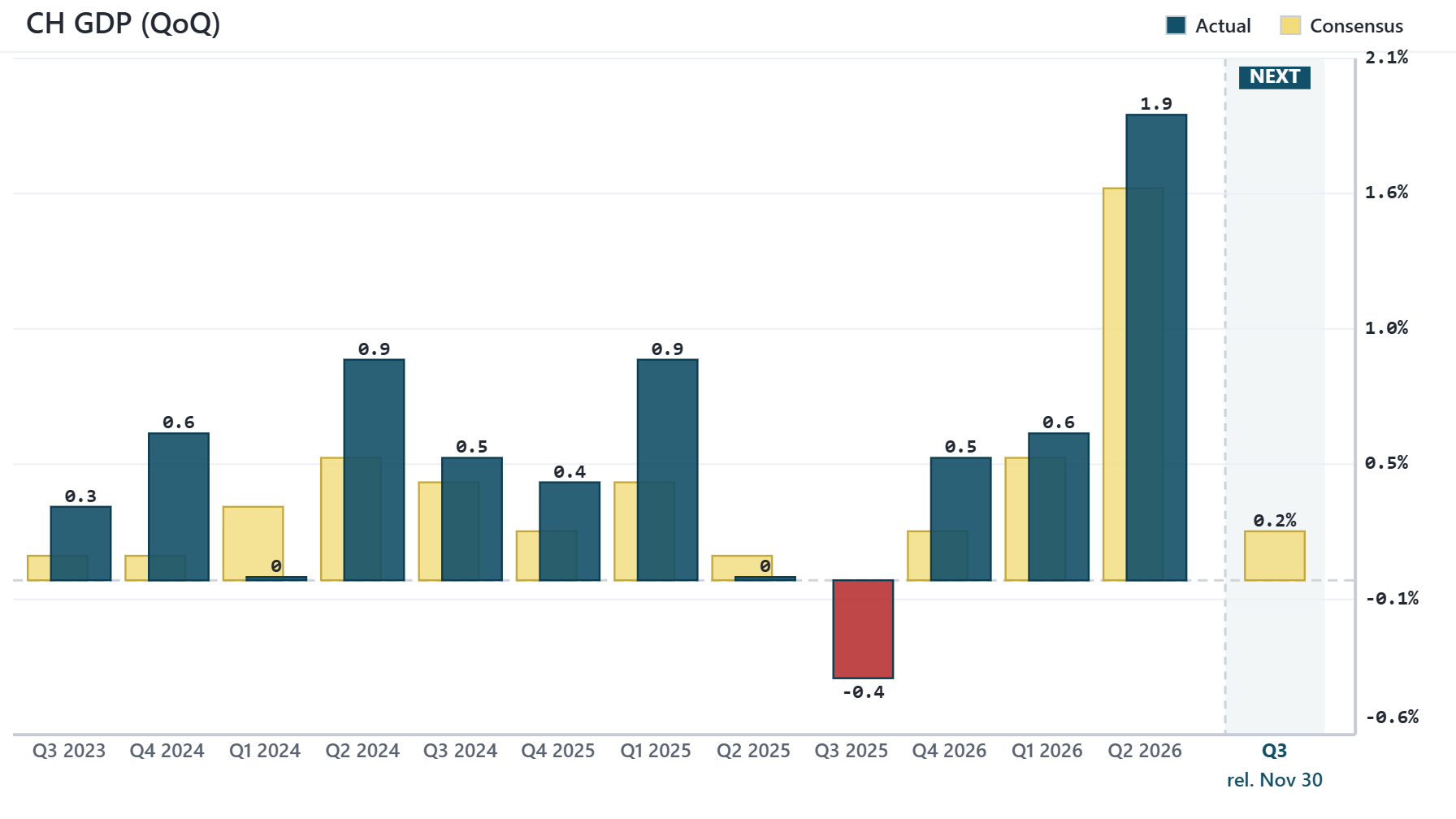
The week opens on Monday, November 30, with final third-quarter GDP for Switzerland (tracking around 0.2% quarter-on-quarter, down from 1.9% in Q2). Steady bullion demand and 10-year yields at 0.56% should keep franc inflows intact.
German CPI and Canadian third-quarter GDP follow the same day. Canada’s loonie enjoys firm BoC hike odds ahead of December 9, backed by Brent crude trading near $95 a barrel.
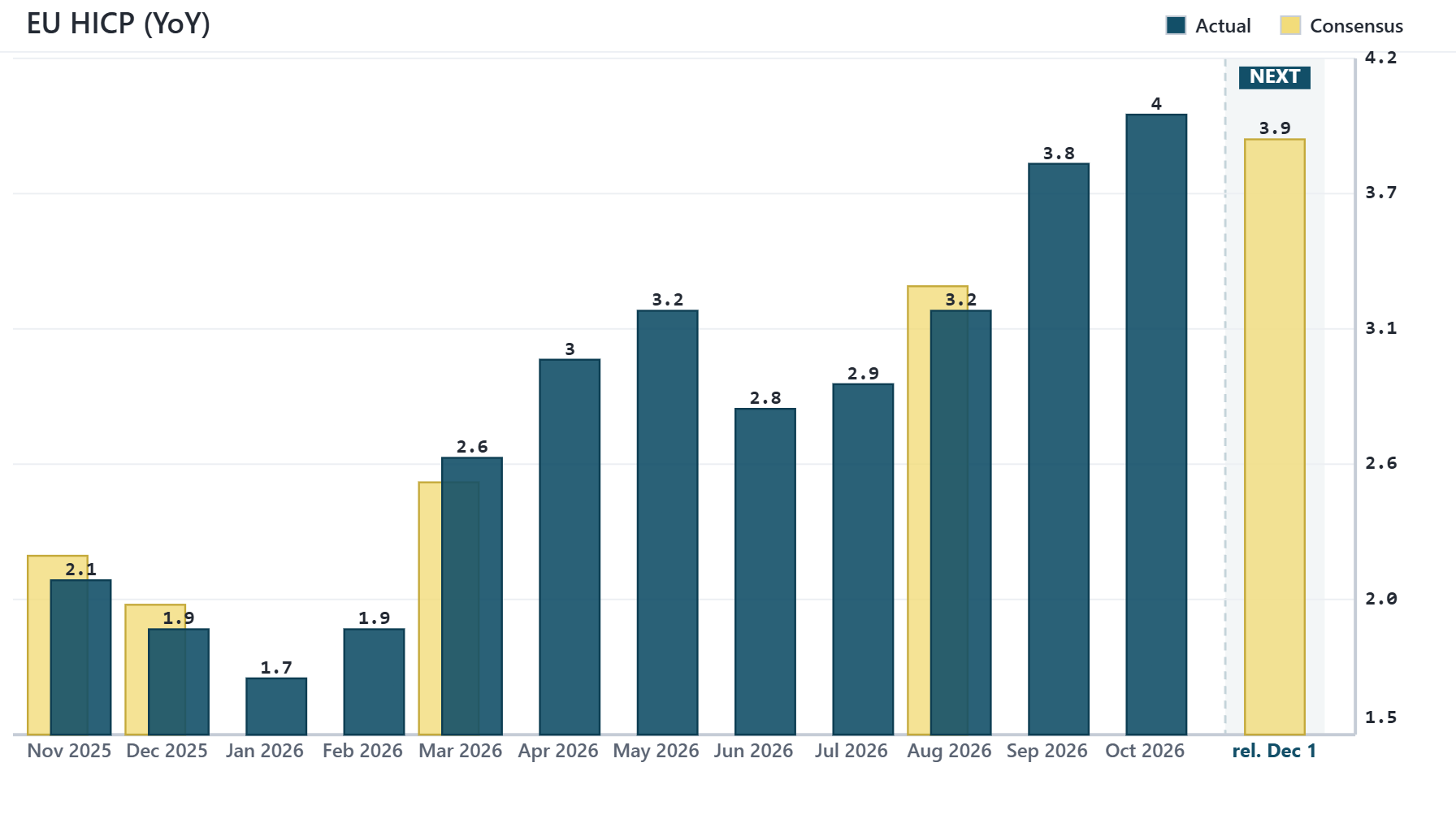
On Tuesday, December 1, Eurozone HICP tests the euro, where heavy ECB hike pricing for December 17 clashes with Reuters reports of S&P’s negative outlook on France and 10-year Bund yields at 3.27%.
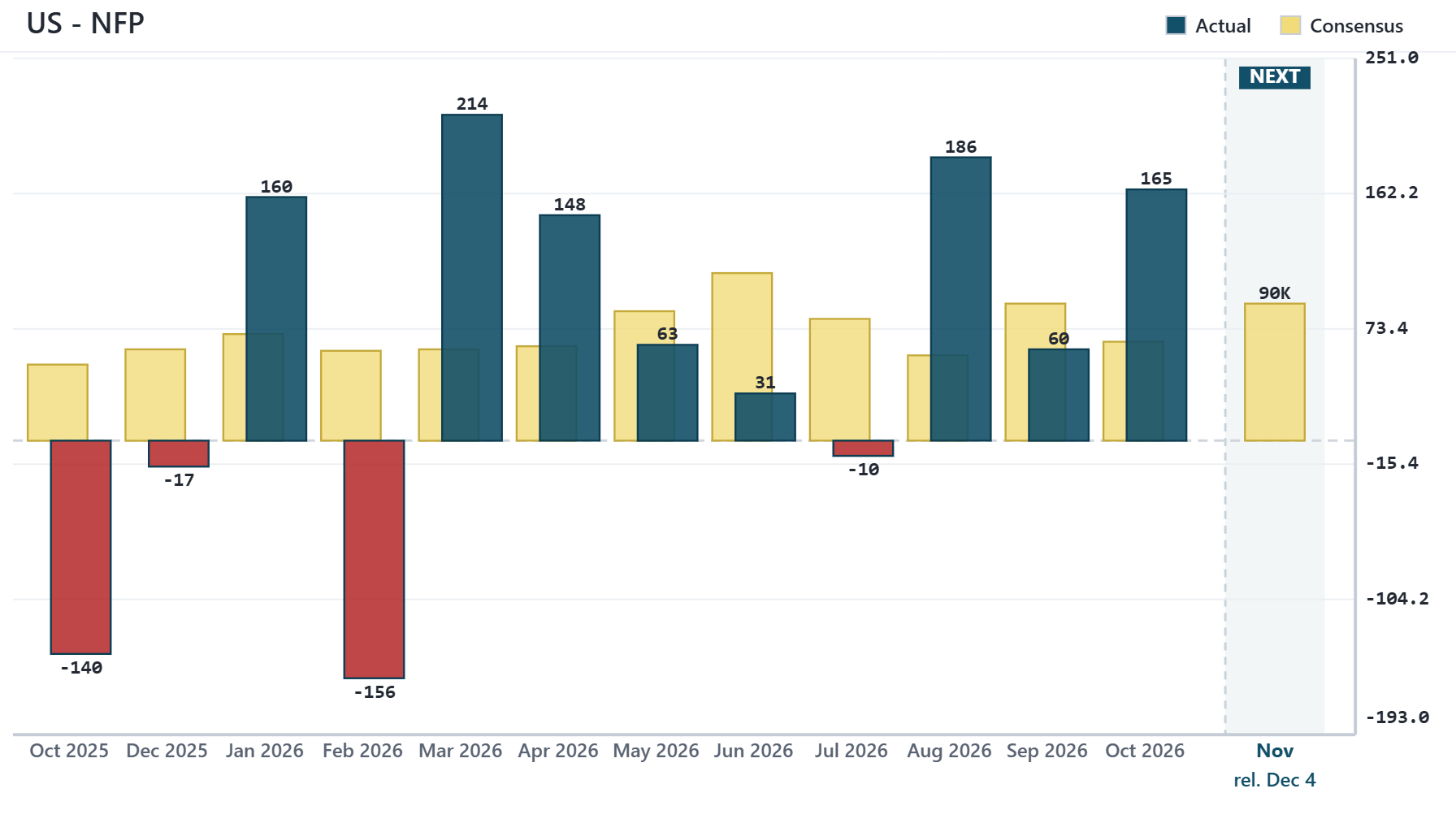
That same day brings US ISM Manufacturing PMI (forecast near 55.0, signaling healthy expansion) and UK Manufacturing PMI, where 10-year gilt yields around 5.19% offset sluggish growth. Wednesday, December 2 features Australian third-quarter GDP (estimated at 0.5% quarter-on-quarter) and US ADP payrolls, before Thursday’s Australian trade balance. Friday, December 4 delivers the week’s main event: US nonfarm payrolls (projected at 90,000 jobs, cooling from 165,000 prior) and Canada’s unemployment rate (seen dipping to 6.6% from 6.7%).
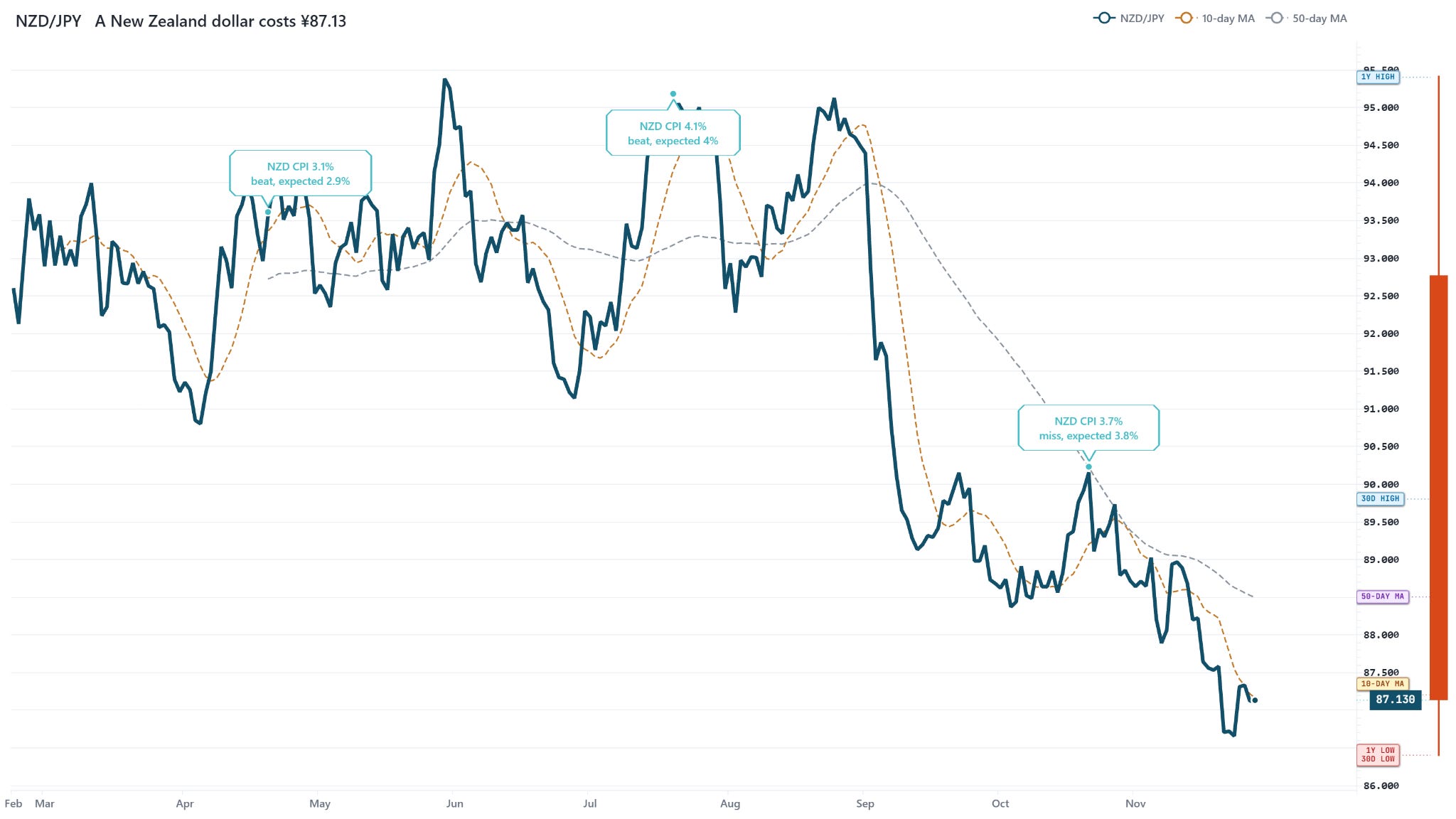
Against this backdrop, I’m watching NZD/JPY for buying interest on pullbacks toward the 88.02 swing level. That pits stretched CFTC kiwi short crowding, prime for an upside squeeze, against crowded speculative yen longs facing carry decay.
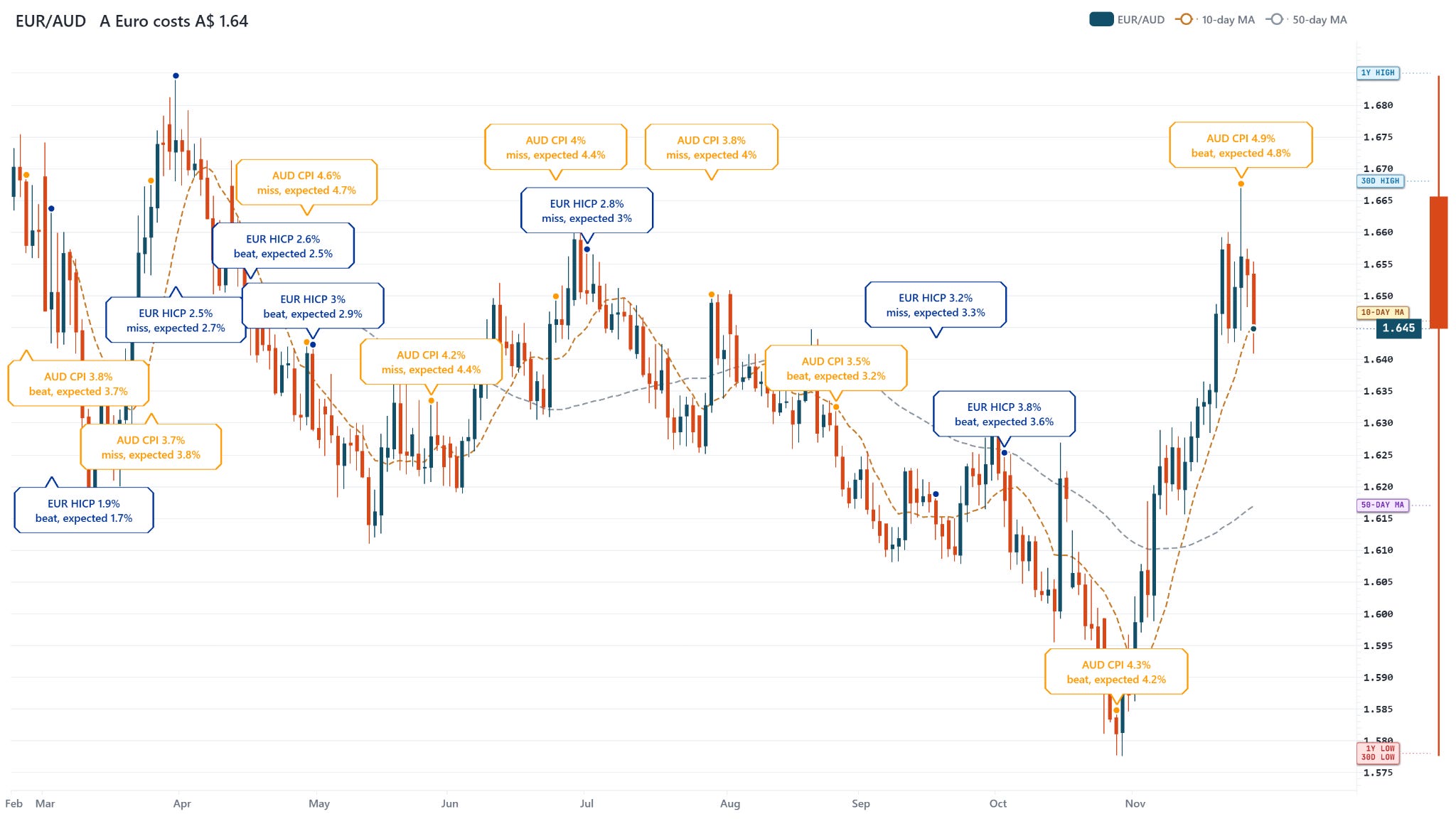
I’m also watching EUR/AUD for dip-buying near 1.648 as RBA policy fatigue weighs on the Aussie. A VIX jump above 24 or BoJ intervention warnings near 159 would quickly invalidate both views.
Long-Term Outlook: The Weeks Ahead
Looking into December’s central bank cluster, widening rate differentials will dictate currency trends. While the Fed, BoC, RBNZ, ECB, and BoE remain poised to tighten to contain energy-driven inflation, the RBA’s expected December 8 pause leaves the Australian dollar at a carry disadvantage.
Japan’s reliance on imported fuel, underscored by October’s ¥476.5 billion trade deficit, keeps the yen vulnerable whenever equity volatility subsides. Fiscal strains will also shape sovereign curves into year-end. A projected 5.8% of GDP US deficit and France’s 5.5% deficit contrast sharply with Swiss fiscal discipline, preserving defensive capital demand for the franc even with the SNB policy rate anchored at zero.
Fundamental Analysis pages to bookmark…
DISCLAIMER: This site is informational only, NOT financial advice. Trading involves risk, and you could lose money.